June 05, 2012
By: NCVeditor
Category: Culture, Politics, Randall Amster
Humanizing Our Engagement with Others
by Randall Amster
Drones are all the rage these days, and not in a good way. The increasing toll taken by these robotic executioners is beginning to register with the public, after many years of automated death from above in our adventurist wars. Still, the use of drones is expanding  in many places, and not just in the theaters of combat. Drones are used to patrol the U.S.-Mexico border. Local governments and police forces use drones, even if they’re disclosed publicly as part of safety programs or for purposes other than enforcement. Many are equipped with cameras, widening the surveillance society even if not overtly used as tools of destruction.
The issue of expanding automation in foreign combat and domestic policing alike raises many questions apart from the legality of its use in war. Remote-controlled bombing contributes to a greater sense of “action at a distance†that works to overcome a natural human prohibition against killing our own kind — one that soldiers have to be conditioned to surmount. The steady distancing effect of modern warfare continues to push the envelope of our empathetic capacities while enabling remote outcomes with little risk involved. Read the rest of this entry →
Comments (4)
June 04, 2012
By: NCVeditor
Category: Current Events, Politics, Robert C. Koehler
Balancing the Worst Human Instincts with Our Best
by Robert C. Koehler
The poison seeps slowly into the future. No one notices.
 “The Obama administration,†the Wall Street Journal informs us, “plans to arm Italy’s fleet of Reaper drone aircraft, a move that could open the door for sales of advanced hunter-killer drone technology to other allies . . .â€
I can’t quite get beyond the name: Reaper drones?
“The Predator’s manufacturer, General Atomics, later developed the larger Reaper,†John Sifton wrote last February in The Nation, “a moniker implying that the United States was fate itself, cutting down enemies who were destined to die. That the drones’ payloads were called Hellfire missiles, invoking the punishment of the afterlife, added to a sense of righteousness.†Read the rest of this entry →
Comments (2)
June 01, 2012
By: NCVeditor
Category: Ecology, Martin Zehr, Politics
Water Budgets Meet Financial Budgets in California ‘Water Wars’
by Martin Zehr, aka Mato Ska
There is an increasing body of evidence that any resolution to the peripheral canal and Delta infrastructure is meeting a financial wall around which there is no room to maneuver. What is happening in California is no different in many ways from what is happening 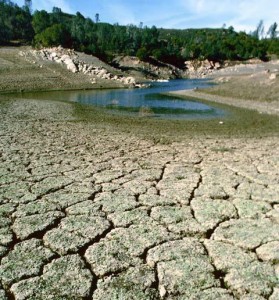 elsewhere. Water wars are driven by allocations, financial and hydrological. Coastal urban allocations in California are disproportional in their priority because of the use of geo-political entities. As the Central Valley becomes more urbanized there is an increase in their political representation. But as long as diversions are the solution of choice in California, regional planning will never be utilized to integrate urban users with agricultural and rural users in the decision-making process.
There is a real base of support here in California among ag and rural users for regional planning. At this stage, this is primarily to get the State Legislature out of the process. Politically, there remains the Arnold attitude towards water that “We can have it all.†This is simply because of the political control of the State Legislatures by urban users. Read the rest of this entry →
Comments (5)
May 31, 2012
By: NCVeditor
Category: Culture, Guest Author, Politics
Revolution of Values, or Values for the Revolution?
by Robert Riversong
It has been said that God (good old divinity) is always whispering in our ears. If we do not hear the voice, it becomes a shout. And if we ignore the shout, we get hit over the head. There is so much din in our ever-accelerating culture that the quiet voice has been all 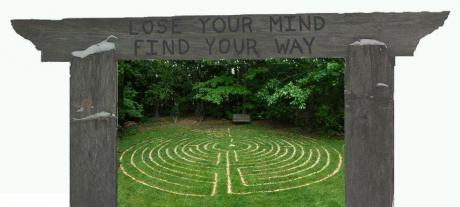 but drowned out. For Job, it required the “voice of the whirlwind†(not the commonly mistranslated “voice in the whirlwindâ€) to wake him. For many of us, it has required the thundering collapse of the World Trade towers, the angry shout of Katrina, the jack-boot stomp of expanding empire and diminishing liberties or the perfect storm of peak oil, climate change, species extinction and ecological devastation to awaken us from our hypnotic trance, our sleep-walking to the edge of the cliff.
But what we seem to agree upon — those of us seeking a way out of the madness — is that the “old story†no longer supports our deepest needs nor any hope for a sustainable world, that we are in a state of Koyaanisquatsi, the Hopi word for “life out of balance.†“Yes, we did produce a near perfect Republic,†said Thomas Jefferson. “But will they keep it, or will they, in the enjoyment of plenty, lose the memory of freedom? Material abundance without character is the surest way to destruction.†Read the rest of this entry →
Comments (3)
May 30, 2012
By: NCVeditor
Category: David Swanson, Ecology, Economy, Politics
Let’s Activate and Innovate, Before It’s Too Late
by David Swanson
Now here’s a book that’s meant to be used: Beautiful Trouble: A Toolbox for Revolution, edited by Andrew Boyd and Dave Oswald Mitchell. The subtitle should be “Try this at home — but innovate!” Instead it’s “From the people who brought you the Yes Men, Billionaires Against Bush, etc.”
 Beautiful Trouble is a terrific addition to Gene Sharp’s catalog of nonviolent tactics, less comprehensive, more up-to-date, more U.S.-centric, and focused on the artistic and the entertaining. When someone whines about what they can possibly do if it’s really true that voting won’t fix everything, hand them this book. When someone proposes violence as the only serious option available, hand them this book.
Here is a guide to activism that focuses on the serious moral case for fundamental change and on making it fun as hell. Here is a sophisticated tool for shaping strategies that are both uncompromising and welcoming of newcomers.
The book is divided into five sections: Tactics, Principles, Theories, Case Studies, and Practitioners. The section on Tactics is far and away the best, with some of the inspiring tactics further developed in the case studies. While the book looks like a reference designed to be searched as needed like an encyclopedia (tons of pull quotes and text in cute little boxes, as if laid out for someone with a four-second attention span) it actually reads very well as a book if you focus on the largest font size and just read it straight through. Read the rest of this entry →
Comments (4)
May 29, 2012
By: NCVeditor
Category: Culture, Diane Lefer, Family, Politics
Cultural Recuperation and the Case of Southern Italy
by Diane Lefer
Last month I learned about a genocide I had never known of before. It happened not in an isolated unknown part of the world, but in Southern Italy, the ancestral home of members of my own family. Even more shocking to me,  Southern Italians themselves are only now beginning to learn the facts of this ethnic cleansing, in large part thanks to the books of Pino Aprile, journalist and Southerner. Terroni: All That Has Been Done to Ensure That The Italians of The South Became “Southerners” had an electrifying effect on my friend Enzo Fina who comes from Lecce, in the heel of Italy’s boot. Enzo is half of the duo Musicà ntica, the other half being Roberto Catalano, ethnomusicologist from Sicily. Based in Southern California, they keep the music and traditions of Southern Italy alive.
“You grow up knowing there’s something that isn’t right,” Roberto told me.
“You have feelings, even if unconscious,” said Enzo. Read the rest of this entry →
Comments (7)
May 28, 2012
By: NCVeditor
Category: Culture, Ecology, Politics, Winslow Myers
Exploring the Dimensions of Genuine ‘Security’
by Winslow Myers
The vision and possible shape of a world beyond war has modified since the lessening of superpower tensions between the United States and the now long-departed U.S.S.R. In the late 1980s, hopes for a peaceful world primarily involved the successful abolition of  nuclear weapons. As Jonathan Schell has written, while inadvertent nuclear war is more probable than ever before, nuclear abolition begins to look relatively easy in the context of emerging global environmental challenges. Nuclear weapons themselves have become one more of our many ecological problems: even a small regional nuclear exchange could fatally affect agricultural production worldwide over decades, cancelling out the security benefits for any nation of possessing these weapons.
Glaciers melt and mean temperatures rise year by year. At what point do officials distracted by mutual nuclear threats start to take in the bigger picture — that the real “existential threat†to their security might be, say, the unleashing of an irreversible cycle in the thawing of methane gas presently frozen within the Arctic tundra, gas that could dangerously accelerate global warming trends? Read the rest of this entry →
Comments (3)
 in many places, and not just in the theaters of combat. Drones are used to patrol the U.S.-Mexico border. Local governments and police forces use drones, even if they’re disclosed publicly as part of safety programs or for purposes other than enforcement. Many are equipped with cameras, widening the surveillance society even if not overtly used as tools of destruction.