New Clear Vision


constructive commentary for the chronically farsighted


Archive for the ‘Ecology’

Changing Landscapes

November 05, 2012 By: NCVeditor Category: Current Events, Ecology, Pat LaMarche, Politics

Candidate Will Keep Running Until He Wins or Dies Trying

by Pat LaMarche

West Virginia Mountain Party’s Jesse Johnson says he’ll keep running for Governor of the Mountain State until he wins or until he dies trying. He just hopes there are still some mountains left by the time he gets his chance to govern. Johnson, 53, who declared his most recent of three campaigns for governor in August, was born in Charleston when Appalachia had roughly five hundred more mountains than it does today.

Since the late 1950s, coal mining has changed immensely. Rather than men crawling through tunnels and harvesting veins of the fossil fuel, vast amounts of ordinance is used to blow the mountains to smithereens along with every living thing that’s on them at the time of the explosion. (more…)


On Acequias

November 02, 2012 By: NCVeditor Category: Community, Culture, Devon G. Pena, Ecology

Water, Place, Resilience, and Democracy

by Devon G. Peña (Sangre de Cristo Acequia Association; San Luis, Colorado)

{Note: This post is a synthesis of select excerpts from work appearing in a chapter prepared for a forthcoming edited anthology, Voces de Agua: Culture, Place, and Nature in the Acequia Communities of the Upper Rio Grande Bioregion, 1598-2008. This article presents a summary of some of the principal research findings of the path-breaking NEH Upper Rio Grande Hispano Farms study, the core of which was conducted in the field between 1995 and 1999. This massive research project, with more than $190,000 funding from the National Endowment for the Humanities and the Ford Foundation, produced the first comprehensive interdisciplinary and farmer-led study of acequia farms of the Río Arriba since the historic Tewa Basin Study of the 1930s; that sadly, is a testament to the neglect of acequia agroecosystems and communities by governmental and academic institutions. The twenty-four research scholars and farmers who collaborated in this major study developed some enduring innovations for integrated social and natural scientific research on Indo-Hispano agroecosystems that have left an enduring mark on the field. The NEH study played a significant role in the revival of acequia studies in the United States at a time when no one was really paying much attention to the study of Chicana/o farmers.} (more…)

Otherworldy Dreams

October 30, 2012 By: NCVeditor Category: Culture, Ecology, Evaggelos Vallianatos

On Religion and Technology in America

by Evaggelos Vallianatos

Garry Wills, professor of American history and author of Bomb Power, says that the atomic and nuclear bomb remade the country into a National Security State fostering perpetual emergency, secrecy and war.

“Secrecy,” says Wills, “emanated from the Manhattan Project like a giant radiation emission.” Indeed, Wills argues very persuasively that the Manhattan Project turned out to be not merely a “fatal miracle” because it created the “awesome” bomb but also because of the processes it set in place:

“The military-industrial complex, with a poisonous admixture of government and secrecy, had scored a triumph that would show the way to many other governmental activities… The secrecy that had enveloped Los Alamos [building the bomb] would steal quietly across the entire American landscape in the years to come.”

According to Wills, the other inevitable result of the bomb was that it gave the president supreme power. He alone could decide the fate of the world.

(more…)

Bioplastics

October 26, 2012 By: NCVeditor Category: Ecology, Economy, Sarah (Steve) Mosko

Are They Really a Solution?

by Sarah (Steve) Mosko

Bioplastics are simply plastics derived from renewable biomass sources, like plants and microorganisms, whereas conventional plastics are synthesized from non-renewable fossil fuels, either oil or natural gas. It’s a common misconception, however, that a bioplastic necessarily breaks down better in the environment than conventional plastics.

Bioplastics are nevertheless marketed as being better for the environment, so how do they really compare?

The Problems with Petroleum-Based Plastics

The push to develop bioplastics emerges from alarming realities starting with the staggering quantity of plastics being produced, over 20 pounds a month for every U.S. resident, according to the latest numbers from the American Chemistry Council. Conventional plastics do not biodegrade (defined below) within any meaningful human timescale — they just break apart into smaller plastic fragments. This means that, except for a tiny fraction of plastic that is combusted for energy production, all plastic eventually ends up as trash, either in landfills or as litter. (more…)

On Food and Drink

October 18, 2012 By: NCVeditor Category: Ecology, Martin Zehr, Politics

California Now Has Water as a Human Right — Or Does It?

by Martin Zehr, aka Mato Ska

The headlines read: law passed in California to make water a human right. AB685 does indeed have that language but California is far from that as a reality. The question really is whether this is a real breakthrough or whether it presents the potential of a creating a new maze of litigation in the future. From looking at the language of the bill, it would be a profound mistake to consider this a victory for poor people or an acknowledgement of their basic survival needs. It needs to be said that there are so many questions raised by such a law that are not addressed in the law that it will assuredly result in profound impacts on farmers and farm workers throughout the state of California.

Water as a Human Right has to be defined in the context of both drinking water and food production. (more…)

Local, Slow, and on the Street

October 12, 2012 By: NCVeditor Category: Community, Devon G. Pena, Ecology, Economy

Exploring the Roots of Urban Agriculture in Mexico 

by Devon G. Peña

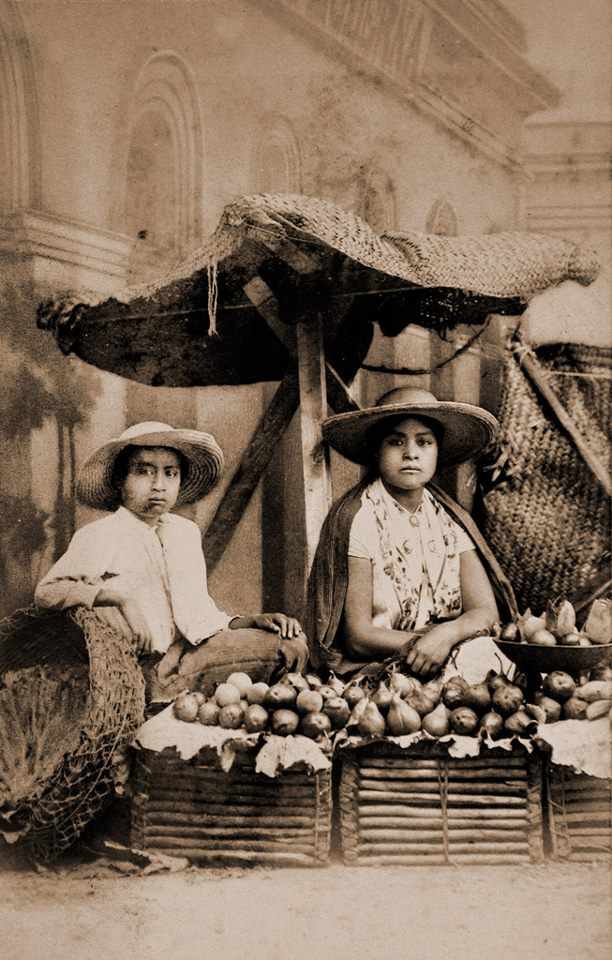
Every now and then a photograph really speaks more than a thousand words. The accompanying 1865 photograph shows two fruit and vegetable vendors in Mexico City. Judging from the architecture in the background, the photo was most likely taken inside the historic core, perhaps close to the Zócalo.

A lot of commentary has been made about this photo. One thread of comments emphasizes the perceived poor condition of the ambulantes (mobile street vendors). How one can surmise this seems difficult but one comment posted recently to Facebook argues that the photograph demonstrates “The poor condition of the vendors, which can still be seen in the streets of Mexico City today.”

However, even by today’s standards, these vendors actually look fairly well dressed and healthy. These lamentations about the urban poor strike me as betraying a modernist urban sensibility and class bias. If anything, given the source of the comments on Facebook, they illustrate a widespread failure, common to what I can only characterize as petit-bourgeois intellectuals, to understand that for many people street vending is as much a way to earn an income as it is a social and community-building activity — a way of life even. (more…)

In Defense of Tumbleweeds

October 08, 2012 By: NCVeditor Category: Culture, Ecology, Walt Anderson

Reflections of Ourselves in Coping with an ‘Invasive Species’

by Walt Anderson

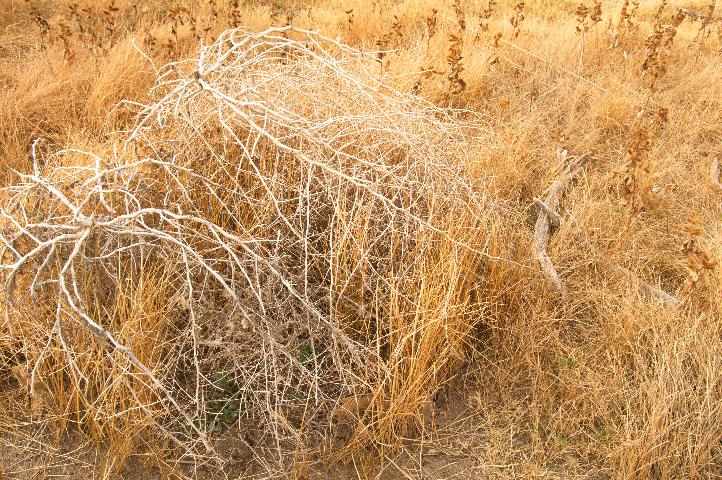
Drifting along, like a tumbling tumbleweed.  That catchy tune warbled by the Sons of the Pioneers somehow epitomizes nostalgia for the Old West.  Never mind that the tumbleweed is a carpetbagger, an interloper, an émigré otherwise known as Russian thistle.  I’ve heard tell that the Russkies sent it here as a kind of biological weapon, a plague on our plains, a prickly infestation designed to lay waste to our grasslands, to overwhelm us with its ability to take any of our attacks against it and come back stronger than ever.  Where is the real truth here?

As an ecologist, I am always suspicious of introduced species.  What are they outcompeting?  What natives suffer at the advancing wave of heavily armed hordes of aggressive Salsola? (more…)

  • Welcome to NCV

    A (relatively) NEW blog filled with (generally) CLEAR intentions and a (positive) VISION for the future.
  • Latest Posts

  • GONE, NOT FORGOTTEN

    Since launching in 2010, we featured many inspiring writers on cutting-edge issues. In times of escalating crises, we sought to remain proactive rather than perpetually reactive, to not give more power to those who would co-opt the agenda, and to try turning visions in practice. We can critique what is and offer insights into what could be, without becoming embittered in the process. We weren't partisan, but we'll always stand on the side of those who desire peace with justice. We're not posting anymore new content as of 2017, but our archive will remain up and you can still find us on social media. We'll see you in the interwebs...
  • New! Thematic ‘Zines

  • Tags

  • Archives

  • NCV Bookmarks

    Peace Ecology
  • Green by DreamHost

    carbon neutral * renewable energy
    Green Web Hosting! This site hosted by DreamHost.