Babes of Wrath
A Journey into the Deep-Seated Poverty of America
by Pat LaMarche
{Editor’s Note: NCV Contributor Pat LaMarche embarks on an epic journey, rekindling the spirit of Steinbeck’s fictional Joad family to explore issues of homelessness and poverty in the U.S. We’ll present Pat’s reflections from the road as she and her intrepid traveling companion continue on the journey…}
 This week I started out on a 5000-mile journey through the inner city shelters, backwoods camps, and forgotten hideaways of our nation’s poorest people. I’ll meet babies, toddlers, school kids, drop outs, drug addicts, minimum wage earners, former home owners, veterans, the elderly and more. But I won’t do it alone. I’m traveling from Little Rock, Arkansas to Los Angeles and all the way back to Asheville, North Carolina with a hero friend of mine. This is my third trip traveling through the wealthiest nation and into the world of the homeless, and it’ll last a little more than a month. It’s my friend’s first trip, but she’s been on it for more than eight years. (more…)
 and women, infants in mothers’ arms, pigs, chickens, and water buffalo. Then, the Americans proceeded to kill them all, slowly, carefully, methodically. It took four hours (this was no sudden outburst of passion), until all 504 people and all the animals were massacred. Fifty-six of the people killed were under seven years old; some of the infants were bayoneted to death. Women were raped before being shot.
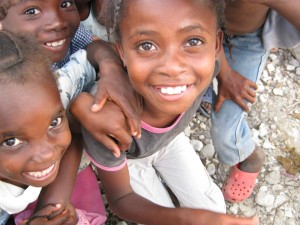 I am writing this letter at 3:53 pm on January 12, 2013.  Three years ago today, Port au Prince was bustling with activity as people spilled into the streets from work and school.  Mothers returned home after a long day of working under the hot sun, fathers greeted their children with tired eyes, neighbors shared warm handshakes and laughed away the day’s challenges.  One hour later the city collapsed and over 300,000 of these mothers, fathers, children and neighbors were lost in an instant. Last night at the stroke of midnight the hills around our house in Port au Prince exploded with voices from the thousands of people attending an all night service in honor of those lost in the earthquake 3 years ago today. What struck me most deeply, was not the despair in the voices, it was the sound of ecstasy, the sound of resilience it was the sound of life. It was as though at the same time as people were mourning their loved ones, they were giving thanks for those who were spared, the were celebrating their strength in surviving, not only the earthquake, but the 3 years of struggle that have followed.
  Outside the “radical fringes†of the political spectrum, the silence is almost deafening. This is despite the palpable and (by now) incontrovertible nature of the conjoined crises in our collective midst, as the nexus of economic, ecological, technological, and militaristic challenges before us deepens by the day. Drudgery, droughts, and drones, oh my! Reality possesses a “fantastic†quality that often makes it seem as if we’re moving through a colorized version of an old-school horror flick — a notion reified in the cultural near-obsession with trite invocations of the much-anticipated “zombie apocalypse.â€
Outside the “radical fringes†of the political spectrum, the silence is almost deafening. This is despite the palpable and (by now) incontrovertible nature of the conjoined crises in our collective midst, as the nexus of economic, ecological, technological, and militaristic challenges before us deepens by the day. Drudgery, droughts, and drones, oh my! Reality possesses a “fantastic†quality that often makes it seem as if we’re moving through a colorized version of an old-school horror flick — a notion reified in the cultural near-obsession with trite invocations of the much-anticipated “zombie apocalypse.† A primary example of our transformed security context is the realization that there is only one ocean of air surrounding the earth. Unless all nations make a concerted effort to convert to sources of clean energy, global mean temperatures will continue to rise and cause undesirable extremes of weather. Strategic competition between superpowers like Russia, China and the U.S. becomes irrelevant to the larger crisis of fossil fuel use and carbon dioxide emissions from all countries. The violence of storms in our country may be intensified by the environmental policies of another country, and vice-versa. Fossil fuel corporations, more powerful than many national governments, must be pressured from taking more oil or coal out of the ground even though they have the technical means and the capital to do so. While entrenched interests are resistant to such painful change, countries like Germany are providing a model of how it can be done, having relinquished nuclear power and moved successfully toward hybridized alternatives like solar, wind, tidal, and low-head hydro power — indeed, a far more secure mix than a huge vulnerable nuclear reactor or coal-fired, smoke-belching plant.
