March 09, 2012
By: NCVeditor
Category: Family, Politics, Victoria Law
Oral History Collection Gives Voice to Incarcerated Women
by Victoria Law
The new book Inside This Place, Not of It: Narratives from Women’s Prisons (McSweeney’s, 2011), edited by Robin Levi and Ayelet Waldman, delves into injustices inside women’s prisons through firsthand accounts from the women themselves. These are painful  stories. Many are tales of violence and abuse, most often from family and loved ones. Some are stories of parents who, at best, were not emotionally present for their children; at worst, they not only abused their daughters but allowed others to abuse them in exchange for drugs. There are stories of addiction. These stories are intense and, even though I am well-acquainted with prison horror stories, I needed to put the book down, several times. And then there are the stories from within the prison, which often repeats and exacerbates the horrors the women encountered before their arrests.
These stories illustrate the myriad ways that prisons attempt to erase their personhood: One woman entered prison while pregnant; because her due date fell on a holiday weekend, medical staff forced her into a Caesarean section. She was handcuffed throughout the surgery; she held her newborn for the first time while in cuffs. Another woman was given a hysterectomy without her knowledge or consent. Others discuss the lack of medical care, ranging from the lack of a diabetic diet to staff withholding necessary medications. Women’s humanity is assaulted in other ways as well: In 2010, Colorado prison staff instituted a demeaning search procedure known as the “labia lift” (p. 158): “We had to spread our labia and staff would make us cough while they were looking.” Read the rest of this entry →
Comments Off on Inside This Place
March 08, 2012
By: NCVeditor
Category: Culture, Economy, Evaggelos Vallianatos, Politics
Reflecting on the Delusions of the Corporate State
by Evaggelos Vallianatos
August 2011 marked 50 years since I left Greece for the United States.
In 1961, in Greece, I was a high school graduate with dreams of becoming a doctor. My beloved physician grandmother Demetra had  shown me the way. Now, 50 years later, in the United States, I am not a doctor of medicine, but a doctor of philosophy caught in a time warp.
My American college education was a Renaissance for me, a moment of discovery and self-confidence. In a metaphysical sense, I became Greek in America. However, the moment I left the university looking for a job, I felt I had entered an alien realm. I developed a blurred vision.
The world now is more complicated and dangerous than the world of 1961. Communism is almost gone, but capitalism in America has evolved into a toxic system of poisoning and devouring the earth for profit while, for the Wall Street oligarchy, it is a method of enrichment. In 2008, this oligarchy precipitated one of its periodic national, financial meltdowns in order to reverse progress toward equality and democracy. The Wall Street bankers wrecked the lives of millions of Americans. And yet, the government did not punish the Wall Street bankers. In fact, the government itself is under their sinister influences. Read the rest of this entry →
Comment (1)
March 07, 2012
By: NCVeditor
Category: Community, Culture, Diane Lefer, Family
Try a Little Tenderness…
by Diane Lefer
Imagine working in an office where as people enter they hug and kiss all their co-workers every morning. You start the day with about a dozen hugs and kisses and of course more each time you leave and return. Here we might call it sexual harassment. But I 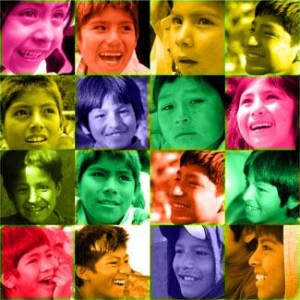 loved these gestures of affection and solidarity while I was collaborating with Educar es fiesta, a nonprofit organization in Cochabamba, Bolivia, serving young people living in difficult circumstances and families in crisis.
Edson Quezada, known to all as “Queso” — Cheese (from his last name, not because he’s the Big Cheese) founded the organization believing that training in the arts is also training for life, that children have an intrinsic natural right to joy, and learning must go hand-in-hand with happiness.
Educar es fiesta draws young people into the program by offering theatre and circus arts–trapeze, aerial dance, juggling, unicycle riding, gymnastics, even some tightrope-walking, to develop self-expression, self-confidence, and perseverance. The kids learn that to develop a new skill, they may fail many times till they achieve success. Read the rest of this entry →
Comments (4)
March 06, 2012
By: NCVeditor
Category: Culture, Ecology, Family, Jan Lundberg
Reintegrating Humanity and All Living Things
by Jan Lundberg
Modern society has adopted romantic love as an individualistic virtue, dating back to the European age of Chivalry and its literature. As chaos and insecurity mounted in the 20th century, “love” became for many the main desired goal. When asked, those left in “peace” would say “peace would be nice too.” As peace retreated in the last 100 years, love seemed more popular.
 What is love? It is a large concept, going beyond romantic love to love of family, friends, pets, music, anything — including a philosophy of loving love. Then there’s loving the planet and wanting to protect it, perhaps by honoring the goddess of the Earth (Gaia, Pachamama, Mother Earth, to give a few of her names).
However, wanting to obtain “love” or more love in one’s life, from a physical lover who also is supportive, is so common that it’s the prevalent idea of love. It is often a self-centered goal. Let’s say finding this romantic love is successful. One then wants “everlasting love” and thus a form of security. But how can “real love” be maintained if there is no peace? Read the rest of this entry →
Comments (2)
March 05, 2012
By: NCVeditor
Category: Culture, Guest Author, Politics
Stacking the Shelves with Peace
by Jake Olzen
Scholars and students in peace and nonviolent studies find their bookshelves teeming with new and intriguing works on violence, conflict, and social change. In the past year, a number of very important books — not all without controversy — have appeared, and  are widely available, that have taken seriously the inquiry of what will it take for peace and a world without war. Two scholars in particular, Steven Pinker in The Better Angels of Our Nature: Why Violence Has Declined and Joshua S. Goldstein in Winning the War on War: The Decline of Armed Conflict Worldwide, argue that humanity is actually becoming less violent. In fact, Goldstein and Pinker penned a piece for The New York Times Sunday Review that was published at the end of December 2011 titled: “War Really is Going Out of Style.†The boldness and veracity of their claims — in that article and their books — come from different perspectives, but is suggestive of a new consciousness that reflects the global interconnectedness made possible by the Internet and intertwined economies as well as the increasing prominence of nonviolence in the mainstream purview. The 2011 publishing of The Oxford International Encyclopedia of Peace confirms the serious role inquiries into war, peace, nonviolence, and social change have in the classroom as well as affirms a growing dexterity with alternatives to war. Read the rest of this entry →
Comments (2)
March 02, 2012
By: NCVeditor
Category: Community, Ecology, Robert C. Koehler
Stirring the Future with Creativity and Hope
by Robert C. Koehler
“Keep a green tree in your heart and perhaps a singing bird will come.â€
Building community is a sacred process, so I begin here with a Chinese proverb that a healer and social worker turned into a song. The sacred has an intensely personal dimension to it, and the singing bird rips it open for me.
 Three weeks ago I wrote a column called “The Barbara Tree,†in which I talked about two things: the orange papier-mâché bird that mysteriously appeared on a branch of the linden tree that had been planted in a nearby park in honor of my late wife; and a blog-in-progress I’m in the process of launching, with some friends, called Chicago Spirit, which seeks to celebrate the world-in-progress that so many people are creating: the world beyond war, eco-exploitation, domination consciousness, spectator culture, and the privatization of the commons.
I invited response, i.e., participation, having no idea what it would look like. This is not a simple world, as cynics would dismiss it. It’s a world of risky reaching out, groping for connection. What I got was music, art, story. What I got was politics, courage, and craftsmanship, sometimes wrapped around anger, more often wrapped around love. And birds and trees kept showing up in fascinating and heart-wrenching ways. Read the rest of this entry →
Comments (2)
March 01, 2012
By: NCVeditor
Category: Community, Ecology, Economy, Jay Walljasper
Annie Leonard Discusses the Influence and Importance of the Commons
by Jay Walljasper
Annie Leonard is one of the most articulate, effective champions of the commons today. Her webfilm The Story of Stuff has been seen more than 15 million times by viewers. She also adapted it into a book.
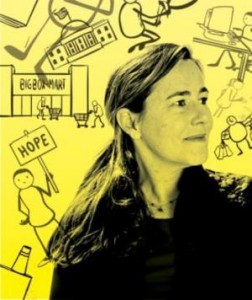 Drawing on her experience investigating and organizing on environmental health and justice issues in more than 40 countries, Leonard says she’s “made it her life’s calling to blow the whistle on important issues plaguing our world.â€
She deploys hard facts, common sense, witty animation and an engaging “everywoman†role as narrator to probe complex problems such as the high costs of consumerism, the influence of corporate money in our democracy, and government budget priorities.
In 2008, she founded the Story of Stuff Project, to help people get involved in making the decisions that affect their future and to create new webfilms on critical issues such as The Story of Citizens United and The Story of Bottled Water. Her most recent film, The Story of Broke, provides a riveting rebuttal to claims that America can no longer afford health and social protections. Read the rest of this entry →
Comments (3)
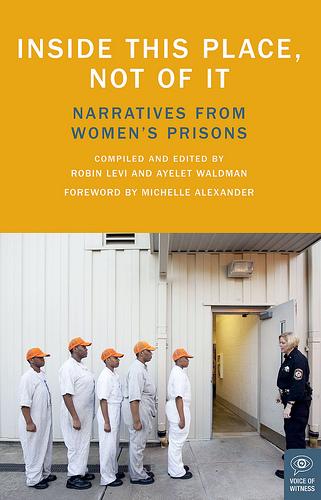 stories. Many are tales of violence and abuse, most often from family and loved ones. Some are stories of parents who, at best, were not emotionally present for their children; at worst, they not only abused their daughters but allowed others to abuse them in exchange for drugs. There are stories of addiction. These stories are intense and, even though I am well-acquainted with prison horror stories, I needed to put the book down, several times. And then there are the stories from within the prison, which often repeats and exacerbates the horrors the women encountered before their arrests.