War’s Lingering Phantoms
Hearing the Stories as a Prelude to Rebuilding
by Robert C. Koehler
“War’s lingering phantoms haunt every society.â€
As two hellish, costly and needless wars struggle toward collapse, this is the time — now, right this minute, before the next false alarm goes off — for us to look honestly at the cost and quality of national security based on militarism. It’s time to squeeze the romance out of war and get it through our heads that war is not inevitable.
War is just another form of mass murder. Its core principle is dehumanization — of all participants, the enemy and the good guys. This is because you can’t hate, dehumanize and train to kill “the other†without dehumanizing yourself and damaging your soul.
“Kill! Kill! Kill, without mercy, Sergeant! . . . Blood! Blood! Bright red blood, Sergeant!â€
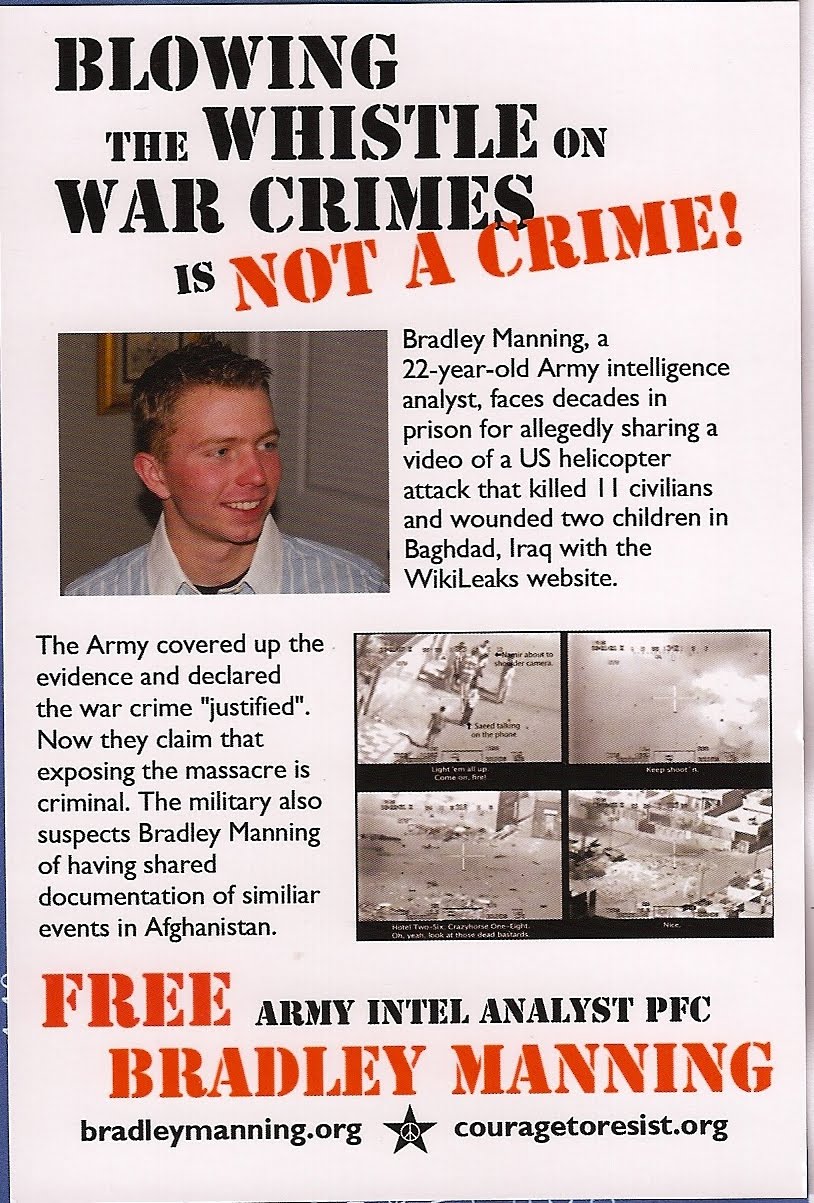
The dehumanization happens at an individual level, to soldiers who, in basic training, go through an intense process of overriding their humanity and establishing “muscle memory†that allows them to kill on command; and who then participate in the killing of the enemy — often enough, in our current wars, the killing of civilians, including children — in battle situations. (more…)
 sat for hours listening to stories of unbridled corruption on the taxpayer’s dime, conspiratorial advances of arms industries into consumer markets, sexually predatory behaviors deemed an acceptable part of institutional culture, and a resulting pessimistic world perspective that would make a seasoned peace activist cringe.
 of war crimes committed by remote control from Whiteman Air Force Base in Missouri against the people of Afghanistan and Pakistan.
 Austin, Texas (home of the University of Texas) gave us the opportunity to speak to scores of social work students about the rapidly rising number of folks with nowhere to live. Our visit early in the week to New Mexico State University likewise gave us an opportunity to discuss two-on-seven with a handful of education doctoral candidates, the world in which they’ll be teaching.
 1. Look at the other person.
 Why have we come to understand that?
