New Clear Vision


constructive commentary for the chronically farsighted


New Revolutionary Nonviolence

September 06, 2012 By: NCVeditor Category: Culture, Matt Meyer, Politics

Dealing with Errors and Breaking with Empires

by Matt Meyer

In my recent piece Building Bridges between Principles and Practice, I noted that there were “concrete, historical incidents in which principled pacifists stuck to their ideals about not engaging in individual acts of violence, but were blinded to the larger issues of institutional violence being perpetrated against those socially considered ‘others.’” These incidents, I wrote, are seemingly more than simple coincidences:

“They suggest fault lines, especially along race and class, where one set of principles contradicted or trumped another. Sometimes without self-awareness, time and again, pacifist attempts to create a nonviolent culture (especially a single, white-washed or homogenized culture) led to acts which served to solidify institutional violence. Similarly, through ignorance or distance from those oppressed peoples struggling for justice ‘by any means necessary,’ even when they were often predominantly using nonviolent tactics, ‘First World’ pacifists missed — and still miss — the vital lessons offered by people who could easily be our closest colleagues.” (more…)

Working for Peace & Justice

June 12, 2012 By: NCVeditor Category: David Swanson, Politics

Why Even Failed Activism Succeeds

by David Swanson

I enjoy reading histories of past activism, including memoirs by long-time activists, such as Lawrence Wittner’s new book, Working for Peace and Justice: Memoirs of an Activist Intellectual (University of Tennessee Press, 2012).

Almost every such account includes belated discoveries of the extent to which a government was been spying on and infiltrating activist groups.

And almost every such account includes belated discoveries of the extent to which government officials were influenced by activist groups even while pretending to ignore popular pressure.

These revelations can be found in the memoirs of the government officials as well, such as in George W. Bush’s recollection of how seriously the Republican Senate Majority Leader was taking public pressure against the war on Iraq in 2006.

Of course, activism that appears ineffectual at the time can succeed in a great many ways, including by influencing others, even young children, who go on to become effective activists — or by influencing firm opponents who begin to change their minds and eventually switch sides. (more…)

Beautiful Trouble

May 30, 2012 By: NCVeditor Category: David Swanson, Ecology, Economy, Politics

Let’s Activate and Innovate, Before It’s Too Late

by David Swanson

Now here’s a book that’s meant to be used: Beautiful Trouble: A Toolbox for Revolution, edited by Andrew Boyd and Dave Oswald Mitchell.  The subtitle should be “Try this at home — but innovate!”  Instead it’s “From the people who brought you the Yes Men, Billionaires Against Bush, etc.”

Beautiful Trouble is a terrific addition to Gene Sharp’s catalog of nonviolent tactics, less comprehensive, more up-to-date, more U.S.-centric, and focused on the artistic and the entertaining. When someone whines about what they can possibly do if it’s really true that voting won’t fix everything, hand them this book.  When someone proposes violence as the only serious option available, hand them this book.

Here is a guide to activism that focuses on the serious moral case for fundamental change and on making it fun as hell.  Here is a sophisticated tool for shaping strategies that are both uncompromising and welcoming of newcomers.

The book is divided into five sections: Tactics, Principles, Theories, Case Studies, and Practitioners.  The section on Tactics is far and away the best, with some of the inspiring tactics further developed in the case studies.  While the book looks like a reference designed to be searched as needed like an encyclopedia (tons of pull quotes and text in cute little boxes, as if laid out for someone with a four-second attention span) it actually reads very well as a book if you focus on the largest font size and just read it straight through. (more…)

Entrapped!

May 24, 2012 By: NCVeditor Category: Culture, Ecology, Economy, Randall Amster

Confessions of a Violent Consumerist

by Randall Amster

I have a confession to make. I am part of a vast international conspiracy that is bent on violently destroying our way of life and, ultimately, threatening our very survival itself. This cabal has as its unstated purpose the erosion of public institutions, theft on a global scale, and the decimation of democratic structures wherever they may be found. It is a relentless enterprise, rife with hatred and vitriol, and it will not rest until it eliminates all competing systems of ideology and belief.

You see, I am a consumerist.

I didn’t intend to become one; it just sort of happened. My parents were ones too, so I guess it must have started there. All my teachers were ones, and my role models as well. Looking back, pretty much all of my friends and family, and just about everyone I’ve ever known, were also consumerists. My recruitment started early on and was reinforced at every turn by those around me — and likewise by every highway billboard, television commercial, and eye-level point-of-purchase display to which I was exposed. (more…)

Sonic Youth

April 02, 2012 By: NCVeditor Category: Culture, David Smith-Ferri, Politics

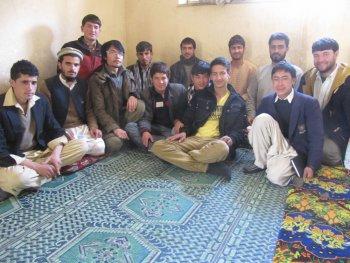
Above the Drone of War, Voices for Peace Rise in Afghanistan

by David Smith-Ferri

In 1876, at the so-called Battle of the Little Bighorn when U.S. Cavalry regiments attacked an Indian village along the Little Bighorn River in Wyoming, the first casualty was a ten-year old Lakota Sioux boy named Deeds. Unaware that U.S. troops were nearby planning an attack, he and his father were combing a hillside looking for a lost pony when U.S. troops encountered and killed him. The next casualties were six Lakota women and four children, who were murdered while in a field gathering wild radish bulbs, one of the many indigenous plants that Native people depended on for their livelihood, and hardly a threatening activity.

I think of these events today because of the recent killings of Afghan civilians, not only the 17 women and children killed in villages outside Kandahar, but also two recent and less publicized atrocities resulting from NATO airstrikes that killed civilians in Kapisa Province, including eight Afghan boys who were tending their sheep. Sheepherding, of course, is an activity as integral to their livelihood as gathering indigenous plants was to Lakota people. (more…)

Partners in the Freedom Struggle

March 23, 2012 By: NCVeditor Category: Culture, Matt Meyer, Politics

Why Nonviolent Activists Should Follow John Brown

by Matt Meyer

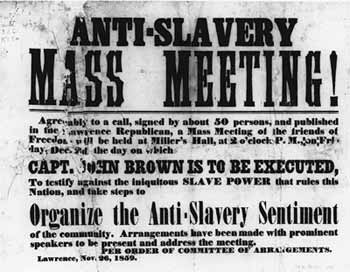
“The lack of historical consensus regarding John Brown,” asserted longtime labor, racial justice, and international activist Bill Fletcher, “speaks to the ideological confusions we continue to face.” Fletcher — a columnist for Black Commentator, Senior Scholar for the Institute for Policy Studies, and former president of TransAfrica — noted that John Brown was anti-slavery, but not just that; he was anti-racist, but there were others at the time who were anti-racist as well. As Fletcher suggested that Brown’s difference was his dramatic defense of enslaved Africans, people he actually befriended and liked, he summarized the dividing line question which still remains: “Was Brown a terrorist or was he engaging in an emancipatory practice?”

This year’s Left Forum — the annual coming together of a broad spectrum of left and progressive intellectuals, activists, academics, organizations and the interested public, the largest in the US — was a different one than usual for me. Award-winning and beloved science fiction writer and old buddy Terry Bisson asked me to join his panel on a favorite topic of ours: the legacy of abolitionist John Brown. (more…)

Teaching Peace

March 12, 2012 By: NCVeditor Category: Community, Family, Guest Author

Interrupting Violence, Cultivating Nonviolence

by Susan Gelber Cannon

In my English classes for the past few years, we’ve read an award-winning novel that deals with racism and violence: Roll of Thunder, Hear My Cry, by Mildred D. Taylor.  As we explore the strong bonds of family that enable the Black protagonists to fight nonviolently for their human and civil rights, my students and I also explore the bonds of humanity that tie us together as classmates and members of the human family.

When students share “circles of culture” in which they examine their own backgrounds, multiple heritages, and interests, they delight in finding surprising similarities along with obvious differences between them and their classmates.  We also interrupt our reading to write “kind words” notes to each other for Valentine’s Day.  Former students return yearly to tell me they’ve kept these tiny “put-ups” and feel good when they read them. (more…)

  • Welcome to NCV

    A (relatively) NEW blog filled with (generally) CLEAR intentions and a (positive) VISION for the future.
  • Latest Posts

  • GONE, NOT FORGOTTEN

    Since launching in 2010, we featured many inspiring writers on cutting-edge issues. In times of escalating crises, we sought to remain proactive rather than perpetually reactive, to not give more power to those who would co-opt the agenda, and to try turning visions in practice. We can critique what is and offer insights into what could be, without becoming embittered in the process. We weren't partisan, but we'll always stand on the side of those who desire peace with justice. We're not posting anymore new content as of 2017, but our archive will remain up and you can still find us on social media. We'll see you in the interwebs...
  • New! Thematic ‘Zines

  • Tags

  • Archives

  • NCV Bookmarks

    Peace Ecology
  • Green by DreamHost

    carbon neutral * renewable energy
    Green Web Hosting! This site hosted by DreamHost.