Why I Didn’t March for Science
Whose Interests Are Being Served?Â
by Devon G. Peña
I consider myself an “ethno-scientist.†The methods and practices I follow in the fields of agroecology, ethnoecology, and related areas reflect my grounding in millennia of indigenous knowledge and study of ecological processes in the human-nature interrelationship. The two 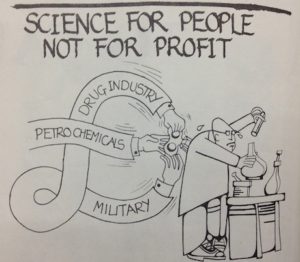 cultures divide that C. P. Snow lamented because it separates the humanities from the natural sciences remains a central concern for me as a practitioner of community-based collaborative and interdisciplinary research.
Yet, I did not participate in the March for Science. And it is not because I am anti-science. I am against continued widespread reductionism of and in science (e.g., the geneticization of all phenomena); I am against continued service of scientists in the capitalist control of knowledge production and the deployment of technologies that place our health, safety, and well-being at higher risk. I am certain many of the scientists who marched will feel the same way; but this is a minority worldview. (more…)
 “American officials had predicted that the missile strike would result in a major shift in Assad’s calculus, but the U.S. attack appeared to be symbolic in reality. Within 24 hours of the strike, monitoring groups reported that warplanes were again taking off from the bombed Shayrat air base, this time to attack Islamic State positions.â€
 The news is All Tr$mp, All the Time, but what’s really happening is only minimally about Donald Tr$mp, even though his outrageous actions and bizarre alliances are the trigger.

 collection of misguided platitudes, this book proposes what still remains a radically different way of thinking, a habit of living that is not in our air. In fact, Nagler’s first piece of advice is to avoid the airwaves, turn off the television, opt out of the relentless normalization of violence.
 happened next was entirely predictable. Post after post by various people brought out the names of all kinds of forerunners of Parks, pushing the date of the first brave resister to segregated buses back further and further — many decades — into the past.
