August 28, 2013
By: NCVeditor
Category: Culture, Current Events, Jennifer Browdy, Politics
Queer Visions of Another World
by Jennifer Browdy de Hernandez
The news this week that Private Bradley Manning had come out as Chelsea made me think first that truth is way stranger than fiction, and second that it makes perfect sense that one of the most courageous warriors of our time would be a queer woman.
 Gloria Anzaldua, who has been one of my heroines since I first read her seminal work Borderlands/La frontera back in the 1980s, always insisted that queer folk have a special role to play in bringing about a change in human consciousness — moving us from the patriarchal mold of the past 5,000 years or so to what she called “a new mestiza consciousness,†a much more holistic, inclusive, planetary awareness.
Anzaldua extended Virginia Woolf’s famous statement, in her anti-war tract Three Guineas, that “as a woman, I have no country. As a woman, I want no country. As a woman, my country is the whole world,†giving it a new queer mestiza twist: Read the rest of this entry →
Comment (1)
August 27, 2013
By: NCVeditor
Category: Culture, Missy Beattie
Reflections on the Health of Our World
by Missy Beattie
I saw the dime when I was running. I continued on and then circled back, picking up the coin to throw to the gods for an unselfish wish. I thought about the mythology, a ritual I usually associate with finding a penny.
 Later, mid-afternoon, as I walked to the grocery, a disheveled man approached. “Can you spare a dime? I need something to eat,†he said. I started to tell him I’d tossed one on his behalf just hours before — that if my wish came true, he wouldn’t be hungry. No one would.
I thought it was clever — to ask only for a dime. He smelled like stale beer. But so what? Around 4:00, I’d have a drink. Maybe two. And possibly smell like stale Prosecco later.
Tucked between finding that dime and encountering the hungry man, a floor expert was in my apartment. Because… Read the rest of this entry →
Comments Off on Looking … Seeing
August 26, 2013
By: NCVeditor
Category: Community, Erin Niemela, Politics
Hope in the Face of Injustice
by Erin Niemela
The International Center on Nonviolent Conflict recently hosted the James Lawson Institute in Nashville, Tenn. The first event of its  kind, the Institute is an eight-day intensive training for North American organizers and activists, hosted by none other than Rev. James Lawson, himself an iconic figure of the Civil Rights movement. I was among 45 applicants afforded the opportunity to attend, notable activists and organizers from a variety of causes and campaigns (all of them far more experienced and courageous than I consider myself, to be sure). What I went there hoping to learn about civil resistance is nowhere near as important as what I actually gained: a profound sense of hope for the future of this world, this powerful group we call the people.
Our teachers included Rev. James Lawson, an instrumental figure in the Civil Rights Movement, Ivan Marovic, a leader of Optor!, the Serbian nonviolent revolution of 2000, and Mary King, an inspirational woman who worked in the pre-eminent Student Nonviolent Coordinating Committee during the Civil Rights Movement. We underwent four 14 hour-per-day trainings, covering historical cases, strategies, tactics, and movement cultures, among other more sensitive topics such as privilege, systemic oppression in movements, sustainability, burnout and dealing with interpersonal conflict. The intensity of these discussions had been set too high and left there permanently with little reprieve, and I found myself asking some existential questions: Who am I? What is my purpose? Where am I going? Read the rest of this entry →
Comment (1)
August 23, 2013
By: NCVeditor
Category: Current Events, Matt Meyer, Politics
The Worst of Times, the Best of Times…
by Matt Meyer
There is a reason why so many internationalists have had hard times writing clearly about Egypt since the end of June 2013. There is a reason why in English the words “it was the best of times, it was the worst of times†resonates so. The cultural chasms and the political 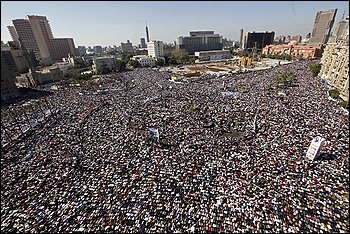 complexity of Egypt’s ongoing revolutionary moments will not lend themselves easily to short statements or translated sound bites . . . but we remain distant from, declarative regarding, or dispassionate about these events at our own grave peril. Nothing less than our collective, twenty-first century understandings of such terms as “democracy,†“revolution,†and “violence/nonviolence†are being forged on the streets of Egypt today.
Events are unfolding too quickly for a report from an outsider to be of much use. But hopefully some definitional reflections, from the perspective of an independent solidarity activist/academic committed to revolutionary nonviolence and socialist/anarchist viewpoints, might provide some context for future conversation and work. Read the rest of this entry →
Comments (2)
August 22, 2013
By: NCVeditor
Category: Angola 3 News, Politics
Saying No to the Architecture of Solitary Confinement and Cruelty
by Angola 3 News
Friday, August 16 marked the 40th consecutive day of a multi-ethnic statewide prisoner hunger strike initiated from inside the Security Housing Unit (SHU) of California’sPelican Bay State Prison. When the strike first began on July 8, the ‘California Department of  Corrections and Reform’ (CDCR) reported 30,000 participants statewide, which the Los Angeles Times reported “could be the largest prison protest in state history.”
This week, as the striking prisoners’ health continued to worsen, the families of prisoners and supporters gathered on the steps of the State Capitol building in Sacramento, and over 120 health professionals called “upon Governor Jerry Brown and Jeffrey Beard, Secretary of the CDCR, to immediately enter into good-faith negotiations with the prisoner representatives, and to respond to their demands, in order to end this crisis before lives are lost.”
The current hunger strike follows on the heels of a similar 2011 strike that was also initiated from the Pelican Bay SHU, with the same five demands. Further illustrating the scandalous nature of California’s prison system, this month the US Supreme Court ruling once again that 10,000 prisoners must be removed from state prisons, and documentation has emerged of widespread sterilization of California’s female prisoners. Read the rest of this entry →
Comments Off on Responsible Designs
August 21, 2013
By: NCVeditor
Category: Culture, Family, James Russell, Politics
Closing the Gap Between Tolerance and Acceptance
by James Russell
In the musical “A Chorus Line,” the audience follows a group of dancers auditioning for the chance to be in a Broadway chorus line. It’s  a popular show about love, coming-of-age and struggle. Told in a series of monologues (and the occasional ensemble number), we eventually meet Paul, a young, gentle, Puerto Rican musical theater enthusiast. “And there was the thing of trying to hide it from my parents,” says Paul, “that was something.” The 16 year old could have been hiding anything from his parents — condoms, drugs, a flask of whiskey. But in this deeply moving monologue, he’s referring to his drag outfit. Paul is gay.
“A Chorus Line” premiered Off Broadway in 1975 between two notable events in the gay rights movement: the Stonewall Riots of 1969 and the AIDS epidemic. Both created a generation of aggressive and proud activists angered by the government’s willingness to bust a gay club, but complacency when it came to addressing a deadly epidemic. Read the rest of this entry →
Comment (1)
August 20, 2013
By: NCVeditor
Category: Community, Politics, Robert C. Koehler
From Outside Occupation to Community Engagement
by Robert C. Koehler
Stopping crime before it happens is a great idea, but stopping young men for “walking while black†— touted by true believers as the same thing — is a game played by an occupying army.
 The tactic is called stop-and-frisk. As practiced by many police departments, including New York’s, it amounts to blatant racial profiling. Stop-and-frisk makes it impossible for young men of color to lead normal lives, to walk outside without fear of preemptive police harassment. The long-term hatred and tension it engenders does far more harm to a community than all the questionable good that proponents ascribe to it. Security based on racism is a sham. Read the rest of this entry →
Comment (1)

