New Clear Vision


constructive commentary for the chronically farsighted


Archive for the ‘Economy’

Two-Tiered Work

January 16, 2013 By: NCVeditor Category: Culture, Diane Lefer, Economy

What Happens in Bogotá Doesn’t Stay in Bogotá

by Diane Lefer

Jorge Parra is speaking out — even though his lips are sewn shut.
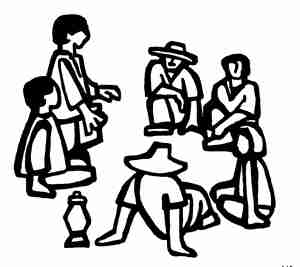
Parra was a skilled trades welder when he went to work for General Motors Colombian subsidiary Colmotores. There, he developed herniated discs, severe carpal tunnel in both hands, and upper spinal tendinosis.

In a translated written statement, he explained, “I underwent three surgeries and now walk with a cane due to the injuries I sustained at GM. When I first started feeling pain in my lower back and legs … I went to GM’s medical center. They gave me injections of Oxycontin and Diclofenac and sent me back to work.” (more…)

Time Is Money

January 08, 2013 By: NCVeditor Category: Culture, Economy, Erin Niemela

The Devastating Impacts of American Culture on Foreign Policy

by Erin Niemela

Two days before Christmas my brother called, frantically demanding I tell him what to purchase for my two young children and myself. For the kids, I said, buy Legos. For myself, I neither need nor want anything. I requested he write for me a brief letter answering the following question: If you could give me anything in the world for Christmas, what would it be and why?  My dear brother’s response was less than agreeable: “What the hell? I’m too busy to do that! Just tell me what you want!” In his defense, he just had a new baby, but his response warrants a closer look into American culture and how it impacts all of us.

My brother, like many other Americans, has aggressively adopted the metaphor for daily life time is money, and so asking him to spend 20 minutes thinking of me was in many ways more expensive than the 20 dollars he opted to spend for my brand new touch-screen Agloves. George Lakoff and Mark Johnson, cognitive linguists, confronted the time is money metaphor in 1980 with their masterful text, Metaphors We Live By, explaining that in Western industrialized culture, time is a commodity, a finite resource that can be spent, invested, budgeted and borrowed. (more…)

Twilight of Twinkie Capitalism

January 04, 2013 By: NCVeditor Category: Devon G. Pena, Ecology, Economy

Transforming the Food System and Honoring Workers’ Demands

by Devon G. Peña

The Twinkie® I will admit is one of those quintessentially ‘American’ foods that I did not get to eat as a child. We never bought junk food in our home and so I was in college before I tasted something that my peers swore was a classic guilty pleasure. I was not impressed when I finally ate one, but then again I grew up savoring pan dulce, including the inimitable pan de semita, from La Superior Bakery in Laredo, Texas. To me, the Twinkie tasted like Elmer’s Glue with sugar encased in a squishy sponge or pound cake. It was too chalky and gooey all at once. Hmm. Must have missed out on the Leave it to Beaver upbringing required, I imagine, to love a quasi-food like that.

[I use the term quasi-food here to refer to what is typically called “processed food.” My choice is based on recognition of the fact that many wholesome and organic foods are processed and so I feel that is an inadequate and misleading concept. For e.g., to produce our farm’s chicos del horno (adobe-oven roasted white flint corn) requires that we process organic heirloom white flint corn in a labor-intensive artisanal practice involving no less than 19 distinct steps. Quasi-food implies that the food is processed through various steps before consumption but also that it incorporates numerous non-food chemicals and additives, thus rendering the product more of an industrial quasi-food item rather than a processed food.] (more…)

Put It Behind Us

December 31, 2012 By: NCVeditor Category: Culture, Ecology, Economy, Jan Lundberg

New Year’s Resolutions for a More Simplified and Peaceful Life

by Jan Lundberg

To put behind us the “con$umerist relationship” that we have with nature, we can do something new that may be radically traditional. Judge for yourself whether if done widely, it might inspire to move us faster toward a paradigm of actual sustainability. Maybe it’s something like this new set of alternative New Year’s resolutions. Some of them happen to be gift options too. Let the fun and peaceful rebellion begin, starting with a solstice party.

Humans did evolve by spending many a millennium in “the Garden” — pre-civilized living without the antithesis of nature, i.e., the city. It is obvious we now need to bring back our intimate relationship with the Earth before it is too late. It this all sounds too familiar or boring, what about being a little subversive, eh? It’s simple: (more…)

A Gospel of Wealth

December 28, 2012 By: NCVeditor Category: Culture, Economy, Robert C. Koehler

Making Eye Contact with the Poverty in Our Midst

by Robert C. Koehler

“I’m pregnant,” she said.

Well, OK. She wanted $4. I could have done the “pretend not to see you” thing. Taking that option is part of life these days, especially in Chicago. She’d been standing in the middle of the intersection, trying to get money so that — if she was to be believed — she and her daughter could get dinner at the McDonald’s on the corner. When the light changed, she came over to me. I was out for a walk. It was a beautiful, cold December night.
This is what I’d been thinking: “We are not human beings having a spiritual experience; we are spiritual beings having a human experience.” It was a quote from one of my favorite writers, Pierre Teilhard de Chardin, and at times it feels true — such as when I’m walking through my vibrant, unpredictable neighborhood. Suddenly nothing is ordinary or banal, nothing is to be blown off. Oh, the humanity. (more…)

Solstice Manifesto

December 21, 2012 By: NCVeditor Category: Community, Ecology, Economy, Guest Author

On the Importance of Integrating Social and Ecological Perspectives

by the ISEP Class Working Group

{Editor’s Note: This collaborative statement was produced in the context of a college class focusing on the integration of social and ecological perspectives. The depth of critical engagement with the intersecting crises in our midst, coupled with insightful visions for action and change, provide a source of hopefulness in a time of profound challenges.}

I. Why We’re Concerned

Our world’s current dysfunction is a multifaceted crisis, exemplified by a host of social and ecological problems, including racism, violence, water shortages, drought, species extinction, pollution, and many others. Upon closer examination, the roots and solutions of each of these problems have both social and ecological components, which are dependent upon and directly influence each other. (more…)

Incompatible Aristocracy

December 12, 2012 By: NCVeditor Category: David Swanson, Economy, Politics

The Rich Don’t Always Win…

by David Swanson

Many of us have heard the current period referred to as a second gilded age.  Or we’ve seen the current inequality in wealth in the United States compared to that of 1929.  But we have not all given sufficient thought to what ended the first gilded age, what created greater equality, what created the reality behind that category our politicians now endlessly pretend we are all in: the middle class.  We have a sense of what went wrong at the turn of each century, but what went right in between?

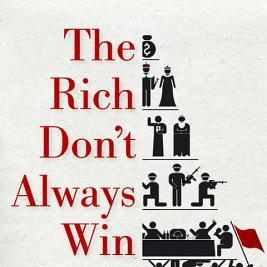
This is the theme of Sam Pizzigati’s new book, The Rich Don’t Always Win: The Forgotten Triumph Over Plutocracy That Created the American Middle Class, 1900-1970.  I take away three primary answers short enough to include in a brief summary. First, we taxed the riches right out from under the rich people.  Second, we empowered labor unions.  And third — and this one came first chronologically as well as logically — we developed a culture that saw it as absolutely necessary for the greater good that the rich be made poorer. (more…)

  • Welcome to NCV

    A (relatively) NEW blog filled with (generally) CLEAR intentions and a (positive) VISION for the future.
  • Latest Posts

  • GONE, NOT FORGOTTEN

    Since launching in 2010, we featured many inspiring writers on cutting-edge issues. In times of escalating crises, we sought to remain proactive rather than perpetually reactive, to not give more power to those who would co-opt the agenda, and to try turning visions in practice. We can critique what is and offer insights into what could be, without becoming embittered in the process. We weren't partisan, but we'll always stand on the side of those who desire peace with justice. We're not posting anymore new content as of 2017, but our archive will remain up and you can still find us on social media. We'll see you in the interwebs...
  • New! Thematic ‘Zines

  • Tags

  • Archives

  • NCV Bookmarks

    Peace Ecology
  • Green by DreamHost

    carbon neutral * renewable energy
    Green Web Hosting! This site hosted by DreamHost.