The Foodopoly
Too Big to Eat?
by David Swanson
We’ve come to understand that the banks are too big to fail, too big to take to trial, too big not to let them write our public policy, too big not to reward them for ruining our economy.
 Why have we come to understand that?
We’ve been told it by a mega media cartel that has itself been deemed too big to fail, too big not to subsidize with our airwaves, too big not to reward with political ads buying back our airwaves in little bits and pieces.
Speaking of which, the buying of elections is moving rapidly in the direction of monopoly ownership itself.
The concentration of wealth and power in the United States over the past half century is not a story of ineluctable forces of technology or progress. It’s a story of orchestrated corruption. Some of its key players were born after it had begun. One of them, the man who was president when some of the worst of the deregulatory legislation was passed, was of course Bill Clinton — who ended welfare as we knew it and recreated it as we wish no one had ever imagined it. Giant corporations and banks are feeding at the public trough. (more…)
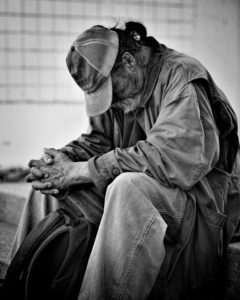 We’ve parked the RV we’re using to travel our 5000 miles through the nation’s impoverished communities at my cousin’s place. Frank lives in San Marino, California. Google says Frank’s house is 12.9 miles from Skid Row. Moving back and forth between the two locations, it becomes more and more difficult to believe that’s true.
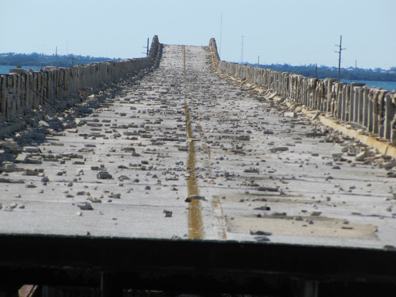 hippies). When a grassroots wing of the environmental movement went after road building and pavement (tarmac) two decades ago, it was quite fringy for mainstream enviros. Then when we went after plastics a decade ago, this too was considered “out there,” and kept low on the list of concerns for the average campaigner.
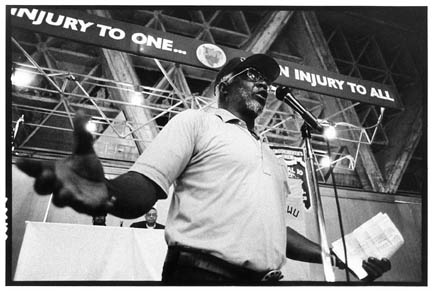 Leo Robinson came into the International Longshore and Warehouse Union because of a deal made by Harry Bridges and the Communists who led the waterfront strike of 1934. That strike metastasized and became a three-day general strike after cops shot and killed three strikers. It was the birth of the ILWU, and changed the political history of the west coast.
 In all of these historical eras, freedom was the watchword, and first slavery, then inequality, the great evil that had to be eradicated in order for us to move forward as a nation.Now we’re in a different period, unlike any we have yet lived through as Americans or as global citizens.
 This week I started out on a 5000-mile journey through the inner city shelters, backwoods camps, and forgotten hideaways of our nation’s poorest people. I’ll meet babies, toddlers, school kids, drop outs, drug addicts, minimum wage earners, former home owners, veterans, the elderly and more. But I won’t do it alone. I’m traveling from Little Rock, Arkansas to Los Angeles and all the way back to Asheville, North Carolina with a hero friend of mine. This is my third trip traveling through the wealthiest nation and into the world of the homeless, and it’ll last a little more than a month. It’s my friend’s first trip, but she’s been on it for more than eight years.
  A primary example of our transformed security context is the realization that there is only one ocean of air surrounding the earth. Unless all nations make a concerted effort to convert to sources of clean energy, global mean temperatures will continue to rise and cause undesirable extremes of weather. Strategic competition between superpowers like Russia, China and the U.S. becomes irrelevant to the larger crisis of fossil fuel use and carbon dioxide emissions from all countries. The violence of storms in our country may be intensified by the environmental policies of another country, and vice-versa. Fossil fuel corporations, more powerful than many national governments, must be pressured from taking more oil or coal out of the ground even though they have the technical means and the capital to do so. While entrenched interests are resistant to such painful change, countries like Germany are providing a model of how it can be done, having relinquished nuclear power and moved successfully toward hybridized alternatives like solar, wind, tidal, and low-head hydro power — indeed, a far more secure mix than a huge vulnerable nuclear reactor or coal-fired, smoke-belching plant.
