The Art of Satyagraha
Achieving ‘Victory’ With, Not Over, the Forces of Conflict
by David Swanson
Michael Nagler has just published The Nonviolence Handbook: A Guide for Practical Action, a quick book to read and a long one to digest, a book that’s rich in a way that people of a very different inclination bizarrely imagine Sun Tzu’s to be. That is, rather than a 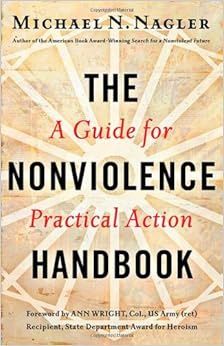 collection of misguided platitudes, this book proposes what still remains a radically different way of thinking, a habit of living that is not in our air. In fact, Nagler’s first piece of advice is to avoid the airwaves, turn off the television, opt out of the relentless normalization of violence.
We don’t need the art of war applied to a peace movement. We need the art of satyagraha applied to the movement for a peaceful, just, free, and sustainable world. This means we have to stop trying to defeat the Military Industrial Complex (how’s that been working out?) and start working to replace it and to convert the people who make up its parts to new behaviors that are better for them as well as for us.
It can seem out of place to shift from a discussion of the world’s largest military to personal interactions. Surely giving John Kerry a complete personality transplant would leave in place corrupt elections, war profiteering, complicit media outlets, and the assumption held by legions of career bureaucrats that war is the way to peace. (more…)
 computer-screen-based symbol to follow, the last weeks have not been kind to progressive icons. Death and dismemberment by mass media has caused the splashing of countless smiling images upon us, but blurred the messages which were central to the lives of dear Madiba and Pete.
  I suppose some people will leave Dirty Wars imagining that we need clean wars, whatever those would be. But too many people seem to be drawing from The Square lessons they brought with them to it, including these: Thou shalt have a leader; thou shalt work within a major political party; thou shalt have an identifiable group of individuals ready to take power. I don’t think following these commandments would have easily changed the past three years in Egypt; I don’t think they’re where Egyptians should be heading; and I’m even more confident they’re blind alleys in the United States — where they serve as supposed remedies for the supposed failings of Occupy.
  months before you plan to officially launch, and when a large percentage of the people signing on ask how they can donate funding, and when people from other countries volunteer to translate your declaration into other languages, and when committees form of volunteer women and men to work on a dozen different aspects of the planning — and they actually get to work in a serious way, and when none of this is due to anything in the news or any statement from anyone in government or any contrast between one political party and another, then it’s time to start thinking about what you’re going to help build as a movement.
  conclude that few are worth a second look. If we are working towards assembling a collection of remembrances which might further the causes Mandela once championed, this month of memorials makes little contributions. Despite a fairly shallow overview in the New York Times Magazine,
  A violent young rebel is imprisoned for decades but turns that imprisonment into the training he needs. He turns to negotiation, diplomacy, reconciliation. He negotiates free elections, and then wins them. He forestalls any counter-revolution by including former enemies in his victory. He becomes a symbol of the possibility for the sort of radical, lasting change of which violence has proved incapable. He credits the widespread movement in his country and around the world that changed cultures for the better while he was locked away. But millions of people look to the example of his personal interactions and decisions as having prevented a blood bath.
 there are few hints of the activism to come.
