The Ultimate Wish
Taking Steps Toward a Nuclear-Free World
by David Swanson
We’ve managed to outgrow or to come within sight of outgrowing cannibalism, slavery, blood feuds, duels, capital punishment, child labor, tar and feathering, the stocks and pillory, wives as chattel, the punishment of homosexuality, and listening to Rush Limbaugh.  To various degrees, these practices — and many others — have been eliminated or reduced and stigmatized.
While the stupidest practice ever created — the mass killing known as war — remains, we’ve seen most of the world ban poison gas, land mines, cluster bombs, biological weapons, depleted uranium, napalm, white phosphorous, and other disgusting weaponry. But the worst weapon of all remains, and the treaty requiring its reduction and elimination is completely ignored.
We’ve begun learning to avoid long-lasting environmental damage. We try not to poison our fruit trees or our grass or our rivers. But when it comes to damage that lasts longer than humanity has existed, we go right on producing it. (more…)
 My colleague — who is a highly respected activist in New Mexico — declared that the movement is largely dead. The EJM, she explained, is a casualty of defunding and especially the loss of financial support for the various national and regional networks. There is no national movement, she argued, because the funders abandoned their commitment to the EJ organizations.
 the American prominence of the movement has faded, worldwide if scattered resistance continues. Focusing on domestic possibility, Matthew Fox and Adam Bucko in conversation relate their stories and create an agenda in Occupy Spirituality: A Radical Vision for a New Generation (Berkeley: North Atlantic, Sept. 3, 2013). Jay Michaelson shares their ideal, if from an arguably more specific perspective, as his title Evolving Dharma: Meditation, Buddhism, and the Next Generation of Enlightenment (Berkeley: North Atlantic, Oct. 15, 2013) indicates. This review explores their intersections, and summarizes their visionary themes, beginning with the Occupy book.
  ending industrial-patriarchal-capitalist imperialism.
 backlash against such a massive and unprecedented intrusion on privacy. Americans may differ on a plethora of political issues, but there’s a common wisdom suggesting broad agreement on core principles such as individual liberty. Alas, widespread pushback against a total surveillance society seems unlikely to emerge, and having the full scope of such a program become publicly known may only increase its acceptability.
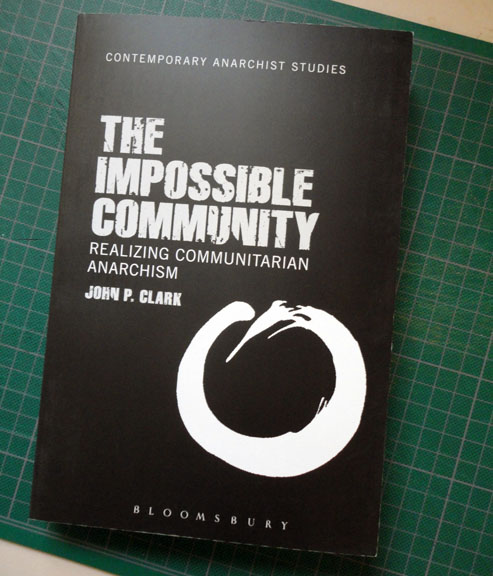 exploitation and domination of one another makes possible similar acts of violence against nature. As long as we remain oblivious to underlying flaws in our collective logic (i.e., that it is reasonable to endlessly consume non-renewable resources on a finite planet; that peaceful, just societies can emerge out of competitive, hierarchical frameworks) any responses we could devise will be insufficient to significantly alter our current course. A social ecological approach to “saving the environment†would require balancing relationships between humans and other humans, and between humans and all other phenomena. It sounds like a tall order…and it is. In light of the obvious destructive effects of systems within which we are obliged to strive for quantity of goods for one over quality of life for all, we are now faced with two choices: pull off the impossible, or perish.
