Peace Over Plutocracy
Conference Remarks: Building Bridges and Creating the Beloved Community
by David Swanson
Several years ago a bunch of peace activists were eating in a restaurant in Crawford, Texas, and we noticed George W. Bush. He was actually a cardboard version of George W. Bush like you might get your photo with in front of the White House, but he was almost as  lifelike as the real thing. We picked him up and stood him in the corner of the restaurant, facing the corner. We asked him to stay there until he understood what he’d done wrong. For all I know he’s still standing there.
Of course, a piece of cardboard wasn’t going to really understand what it had done wrong, and the real president probably wouldn’t have either. The benefit of standing him in the corner, if there was one, was for everybody else in the restaurant. And the benefit of impeaching or prosecuting Bush for his crimes and abuses would have been, and still would be, for the world — not for him and not for those who are angry at him. (more…)
 No individual has done more to push back against what Martin Luther King Jr. called “the madness of militarism” than Bradley Manning. The United States is the leading exporter of weapons and itself spends as much preparing for more wars as the rest of the world combined. Manning is the leading actor in opposition to U.S. warmaking, and therefore militarism around the world. What he has done has hurt the cause of violence in a number of other nations as well.
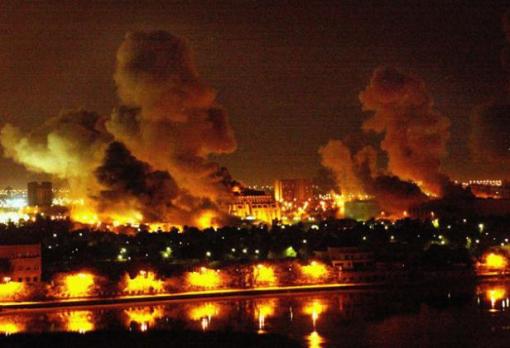 the United States have a realistic idea of what our government has done to the people of Iraq, or of how these actions compare to other horrors of world history. A majority of Americans believe the war since 2003 has hurt the United States but benefited Iraq. A plurality of Americans believe, not only that Iraqis should be grateful, but that Iraqis are in fact grateful.
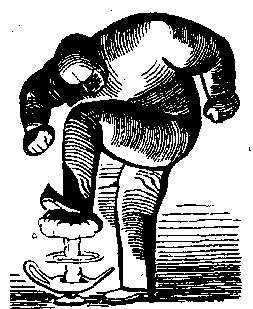 Computer modeling tells us that if even a small fraction of the world’s nuclear arsenals are detonated in a war, doesn’t matter where — could be Pakistan-India, Israel-Iran, U.S.-Russia or China or Iran—the amount of soot thrown skyward could curtail agriculture on the planet for a decade — effectively a death sentence for all.
 (CEML), which she co-founded in 1985 as a response to the lockdown at the federal prison in Marion, Illinois. It quickly turned into a broader campaign against control unit prisons and human rights violations in US prisons that lasted fifteen years, until 2000.  The following excerpt from Out of Control details CEML’s origins:
 vultures and profiteers swarm around the carcass and make a profit and that’s all that matters.
 Why have we come to understand that?
