Spring Forward
Beyond Our Winter of Discontent
by Randall Amster
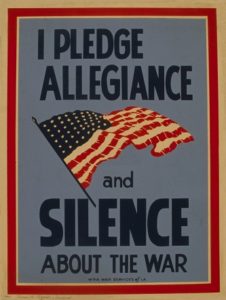
Spring may be upon us, but the prevailing political winds foretell a long, cold season ahead. We’re two months into the Tr$mp presidency, and the template has been set: incompetence, intolerance, scandal, strong-arming, divisiveness, duplicity. If America was longing for a “reality show†at the  top of the news queue, this moment certainly fits the bill — but this is actual reality, and as time passes the damage being done will only increase in its potential to have long-term corrosive effects. And this may well include the likelihood that this Administration’s conflict-centric ethos will manifest in a full-on war soon enough.
If that happens, all bets are off as to what ensues. For those with slightly longer memories, you may recall George W. Bush getting off to a shaky start, with a series of missteps and a penchant for being more interested in golfing than governance. Granted, this is a different era and context, and the players are different — to such an extent that Tr$mp almost makes Bush seem reasonable by comparison (yet not). In many ways, we’re living with the direct consequences of the Bush years, and Tr$mp is the clear beneficiary of a playbook that calls for an imperial presidency and blatant disregard for the Constitution. (more…)
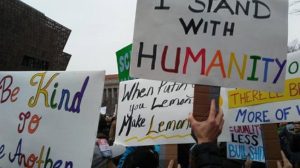 implications not only in terms of policies and principles, but also for the cultural messages it sends about acceptable behaviors and ideologies. And it’s not about political parties — assuming that construct can be pluralized anymore, with the power of the corporate purse strings tethered to those equivalently across the aisle.
 No, no, no, no, no, no, no — no to all his right-wing and idiotic cabinet and Team Tr$mp appointments, no to his conflicts of interest and serial tweets, no to his sexism, his reckless arrogance, his ego, his finger on the nuclear button.
 collection of misguided platitudes, this book proposes what still remains a radically different way of thinking, a habit of living that is not in our air. In fact, Nagler’s first piece of advice is to avoid the airwaves, turn off the television, opt out of the relentless normalization of violence.
 by an organic tool kit. Our technology was mostly biodegradable and not very powerful. Nature was strong — humanity was weak. I am not suggesting we want to revert to that relationship, but did we go in the right direction, and if not, what can we do about it now?
 breast and colon cancer, high blood pressure, cardiovascular disease, obesity, anxiety and osteoporosis, Sallis told leaders at the 2013 Walking Summit in Washington, D.C.
