Why I Didn’t March for Science
Whose Interests Are Being Served?Â
by Devon G. Peña
I consider myself an “ethno-scientist.†The methods and practices I follow in the fields of agroecology, ethnoecology, and related areas reflect my grounding in millennia of indigenous knowledge and study of ecological processes in the human-nature interrelationship. The two 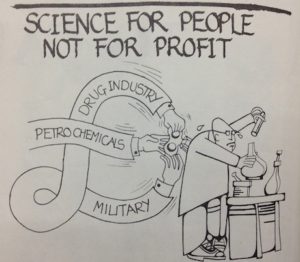 cultures divide that C. P. Snow lamented because it separates the humanities from the natural sciences remains a central concern for me as a practitioner of community-based collaborative and interdisciplinary research.
Yet, I did not participate in the March for Science. And it is not because I am anti-science. I am against continued widespread reductionism of and in science (e.g., the geneticization of all phenomena); I am against continued service of scientists in the capitalist control of knowledge production and the deployment of technologies that place our health, safety, and well-being at higher risk. I am certain many of the scientists who marched will feel the same way; but this is a minority worldview. (more…)
 “Education: How can we best cultivate curiosity, information, and learning between generations to prepare ourselves to perceive and respond to the complexity of our world with less destruction than centuries past?
 political virtues — these are among the hallmarks of this moment. As outrageous as this is, it is also important to remember that none of this exists in a vacuum, and that to some extent these patterns have been with us in various forms for a long time. In considering the cultural context for navigating contemporary challenges, I am drawn to recollections from not long ago…
 decades of social progress and cultural liberalization. This isn’t a “new normal†but rather an old one reemerging, and the only sort of normality it represents is that which is perversely defined by a type of mass insanity.
 My God. There’s more darkness in this quote than the New York Times intended. I winced when I read these words of Ottmar Edenhofer, co-chairman of the committee that wrote the latest United Nations Intergovernmental Panel on Climate Change IPCC report, which the Times quoted in a recent editorial headlined “
