New Clear Vision


constructive commentary for the chronically farsighted


Archive for the ‘Culture’

You Are Where You Live

November 18, 2011 By: NCVeditor Category: Community, Culture, Family, Mary Sojourner

Is There a Place Called Home for the Children of America?

by Mary Sojourner

“You must leave your home and go forth from your country. The children of Buddha all practice this way.” — The thirty-seven Bodhisattva Practices

My friend and I head for the Olympic Rain Forest. We never arrive. Somewhere around Sequim, he feels the northwest pulling him as far as it will be possible for two humans to go. Beyond that point there are cormorants and orcas. There is a blue-black horizon and light fading down into the sea. There is air vibrant with salt.

We stop along the way to where we can go no further. I walk to the water’s edge and scoop handfuls of liquid mineral. I touch my forehead, my heart and belly with wet fingers. I take away a gray-white pebble flecked with mica.

At the Makah Cultural & Research Center, I learn that the people regard the knowledge in that place as “a canoe” carrying them, and a “war club” shattering assumptions and prejudices. I learn that their real name is kwih-dich-chuh-ahtx which means People who live by the rocks and the seagulls. Makah is a name given to them by another First Nation. It means generous with food. (more…)


Peace Happens

November 15, 2011 By: NCVeditor Category: Community, Culture, Guest Author

What if Peace Were Popular?

by Reba Parker

Some of you may be thinking that peace is too important to popularize. I would beg to differ. In the fall of 2011, Charleston Peace One Day, a non-profit located in Charleston, South Carolina took on a strategic mission to do just that. The campaign was called PEACE HAPPENS, setting forth a Call to Action asking people to “do something for peace.”   During peace week, September 14-21, 2011, over 80 groups planned their own unique initiatives for peace. Recall that Charleston is where the American Civil War started (we just celebrated our Sesquicentennial) and is currently ranked forty-second on the U.S. Index of Peace. Most would think we have a long way to go, but nothing is holding us back — except maybe old, outdated images and definitions of peace, and a bit of lingering intolerant history. (more…)

Pax Occupata

November 14, 2011 By: NCVeditor Category: Community, Culture, Ecology, Economy, Politics, Randall Amster

From Relative Peace to Universal Wellbeing

by Randall Amster

Decades ago, on the eve of a period of widespread societal upheaval, Bob Dylan famously intoned that “the order is rapidly fading.” For a time, this appeared to be so: around the world people were in the streets, revolution was in the air, and structures of oppression were being openly contested. The headiness of those days brought many advances and opened up significant space for later movements to operate, yet in the final analysis somehow it all delivered us into even higher degrees of wealth stratification and greater consolidation of power. The order had flickered, but not quite faded, and in the end reasserted itself stronger than before.

Today we stand poised at a not-dissimilar crossroads. While perhaps no one has yet penned a Dylan-esque anthem of the movement — although stalwarts such as David Rovics and Emma’s Revolution have dropped some poignant opening stanzas — a mass chorus of voices is drawing lines in the sand literally everywhere: public spaces, workplaces, shipping ports, shopping malls, community centers, corporate banks, schoolrooms, boardrooms, and more. The Occupy Movement has transcended the narrow confines of Zuccotti Park, and in doing so has seemingly asserted itself wherever the forces of elitism and subjugation rear their heads. As Frederick Douglass said, “power concedes nothing without demand,” and whatever else transpires in the days ahead it can at least be said that the movement has reminded us all of this basic tenet. (more…)

The Fate of Peace

November 11, 2011 By: NCVeditor Category: Culture, Ecology, Politics, Winslow Myers

From Social Psychosis to Collective Sanity

by Winslow Myers

We know from the sad experience of Nazi Germany or Khmer Rouge Cambodia that it is possible for whole nations to become mentally ill, with horrendous consequences. At the time, however, the Nazis or the Khmers had no idea that they were deeply out of touch with the reality that all people are equally worthy of respect and care.

The population of the earth recently surpassed 7 billion. As we move further into the condition of global village-hood, it becomes more important than ever to assess our shared mental health. (more…)

Running on Empty

November 07, 2011 By: NCVeditor Category: Culture, Ecology, Economy, Tina Lynn Evans

As Oil Declines, Can We Fill Our Lives with Creative Energy Instead?

by Tina Lynn Evans

The modern industrial lifestyle is predicated on oil. This notion is widely accepted in American society. Less so is the idea that oil supplies are depleting to the point that rising prices will affect — and in fact currently are affecting — the economy in significant ways. Perhaps even less accepted is the notion that, in a world with less oil, we can’t simply sit back and wait for the next technological breakthrough to solve our energy problems for us — we have to change the way we live.

We won’t be hitting empty overnight, but inevitably and soon, global demand for oil and natural gas will outstrip global extraction and supply. This situation may not sound so dire — until one considers the long-term implications. (more…)

The Blue River Declaration

November 04, 2011 By: NCVeditor Category: Culture, Devon G. Pena, Ecology, Guest Author

An Ethic of the Earth

by The Blue River Quorum

A truly adaptive civilization will align its ethics with the ways of the Earth. A civilization that ignores the deep constraints of its world will find itself in exactly the situation we face now, on the threshold of making the planet inhospitable to humankind and other species.  The questions of our time are thus: What is our best current understanding of the nature of the world?  What does that understanding tell us about how we might create a concordance between ecological and moral principles, and thus imagine an ethic that is of, rather than against, the Earth? (more…)

Iraq Syndrome

November 03, 2011 By: NCVeditor Category: Culture, Politics, Robert C. Koehler

Finding Hope in the Failure of War

by Robert C. Koehler

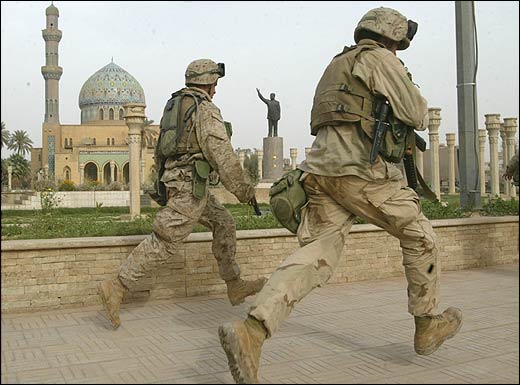
This won’t be Vietnam, exactly. No helicopter whisking the last remaining Americans off the roof of the embassy. A contingent of 16,000 State Department contract employees — over 5,000 of them armed mercenaries — will be staying on, running what’s left of the American operation in Iraq.

But there’s little doubt we lost this war — by every rational measure. Everyone lost, except those who profited from (and continue to profit from) the trillions we bled into the invasion and occupation; and those who planned it, most of whom remain in positions to plan or at least promote the wars we’re still fighting and the wars to come. (more…)

  • Welcome to NCV

    A (relatively) NEW blog filled with (generally) CLEAR intentions and a (positive) VISION for the future.
  • Latest Posts

  • GONE, NOT FORGOTTEN

    Since launching in 2010, we featured many inspiring writers on cutting-edge issues. In times of escalating crises, we sought to remain proactive rather than perpetually reactive, to not give more power to those who would co-opt the agenda, and to try turning visions in practice. We can critique what is and offer insights into what could be, without becoming embittered in the process. We weren't partisan, but we'll always stand on the side of those who desire peace with justice. We're not posting anymore new content as of 2017, but our archive will remain up and you can still find us on social media. We'll see you in the interwebs...
  • New! Thematic ‘Zines

  • Tags

  • Archives

  • NCV Bookmarks

    Peace Ecology
  • Green by DreamHost

    carbon neutral * renewable energy
    Green Web Hosting! This site hosted by DreamHost.