Voluntary Movements
All Over the World, Migrants Demand the Right to Stay Home
by David Bacon
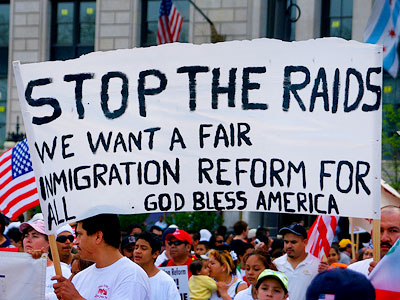
Immigrants, workers, union members and community activists marched on May Day in San Jose. Marchers protested attacks on immigrants, unions and the rights of workers, and called on Congress to pass a just immigration reform.
 The United States has become home to a large number of people born outside its borders — there were some 40 million as of 2010, according to various estimates. That was up from approximately 20 million in 1990.
The immigration debate in the United States usually treats the migration of people into this country as something unique. But it is not. The United Nations estimates that 232 million people worldwide live outside the countries where they were born — 3.2 percent of the world’s population. In 2000 it was 175 million, and in 1990, 154 million. The number of cross-border migrants has grown by 78 million people in just over 20 years — enough to fill 20 cities the size of Los Angeles.
U.S. exceptionalism — the idea that this country is somehow unique and different — has no basis in fact when it comes to migration, which is a global phenomenon. And the big questions are why are the number of migrants increasing so rapidly and what should be done about it. (more…)
 in why people leave home to cross them.
 in the political upsurges of the 1930s, in both Mexico and the United States. Many photographers were political activists, and saw their work intimately connected to workers strikes, political revolution or the movements for indigenous rights.
 rooted in the No Child Left Behind Act,” and condemned its “extreme misuse as a result of ideologically and politically driven education policy.” AFT President Randi Weingarten proposed instead that “public education should be obsessed with high-quality teaching and learning, not high-stakes testing.”  In Seattle teachers at Garfield High have refused to give them.
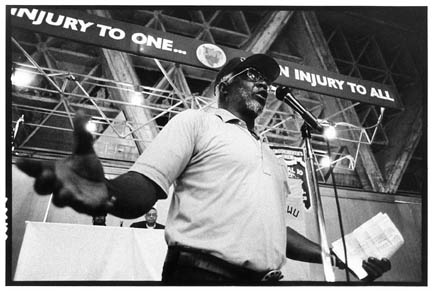 Leo Robinson came into the International Longshore and Warehouse Union because of a deal made by Harry Bridges and the Communists who led the waterfront strike of 1934. That strike metastasized and became a three-day general strike after cops shot and killed three strikers. It was the birth of the ILWU, and changed the political history of the west coast.