Role Modeling
What to Conceal, What to Show?
by Missy Beattie
I think I have a story going. My stream of consciousness is overflowing. With run-on sentences and dangling phrases. Thoughts are tumbling to the pages.
 It’s every writer’s dream — a book deal with the possibility of a screenplay. But I don’t know. A friend said drop it, idle the fingers on this one. It’s lurid.
And, well, I’m a peace and justice activist. I aspire to be like Kathy Kelly. I met Kelly at a peace rally in DC and heard her speak about forgiveness. That we must forgive al-Qaeda. I think of these words often — and how often I fail.
Here’s an example, circa 199?: I was waiting, next in line, for a parking space at Baltimore’s Belvedere Square. When taillights illuminated, I hit the blinker and moved to close in. Suddenly, a white Cadillac with a large red bow on its grill shot around my Volvo, claiming the territory. As a tall, blond and tan Barbie clone in a white tennis skirt emerged from the sedan, I lowered the front passenger window. (more…)
 I ran. I ran and saw in the distance a child with a prosthetic leg — metal from her knee to her shoe. As I neared, I could see that the area above the bend was also artificial. I felt bad, passing her, my legs moving without an ache or pain. And I thought of war, the children whose limbs have been blown useless or off by US imperialism.
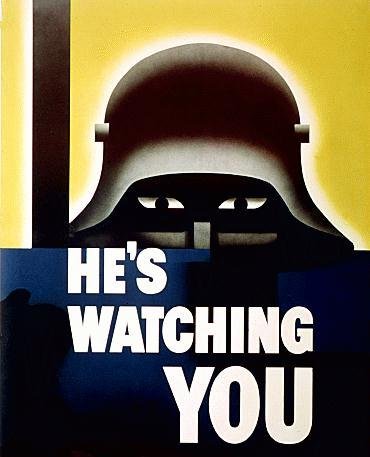 walking paths of their kingdoms, in the interest of country, duty, honor. You know, to scour each other’s lives. It’s not unlike the Buddy System. That other name, Insider Threat Program, sounds harsh.
 Aside from debate about whether our government may be massively violating the 4th Amendment, we need to begin with compassion. It is not hard to see how fear and political necessity are among the engines driving the growth of the secrecy bureaucracy. There are bad actors out there, and a certain alertness is required to prevent them from doing their worst. Political leaders do not get elected by advocating love for enemies.
 backlash against such a massive and unprecedented intrusion on privacy. Americans may differ on a plethora of political issues, but there’s a common wisdom suggesting broad agreement on core principles such as individual liberty. Alas, widespread pushback against a total surveillance society seems unlikely to emerge, and having the full scope of such a program become publicly known may only increase its acceptability.
