World Social Justice Day
A Reminder of Our Moral and Civic Responsibility
by Brian J. Trautman
In one of his most famous writings, “Letter from Birmingham Jail,†Rev. Dr. Martin Luther King Jr. said of injustice, “Injustice anywhere is a threat to justice everywhere. We are caught in an inescapable network of mutuality, tied in a single garment of  destiny. Whatever affects one directly, affects all indirectly.†In other words, the very existence of injustice has implications for us all. Thus, we each have a responsibility to actively challenge unjust power structures wherever they should surface. According to the United Nations, “the immortal words of Dr. Martin Luther King, Jr. have never been more relevant than they are today.†Structural injustices are pervasive in the United States, perhaps more than in any other Western industrialized nation. They include record levels of economic inequality and mass incarceration and attempts to slash entitlement programs, restrict women’s reproductive rights, and erode voting rights. Globally, injustice exists more frequently in other forms, such as poverty, hunger, worker exploitation, sex trafficking, resource privatization, and severe restrictions on women’s and gay rights. In every corner of the world people’s rights and dignity are under constant assault by different forces. (more…)
 Hold the dream with me, as it breaks loose from Jameale Pickett’s poem. Something beyond the insane dance of crime and punishment is happening, at least this year, this moment, in Chicago’s high schools. Young people are getting a chance to excel and become themselves, as more and more schools find and embrace common sense, also known as restorative justice.
 months before you plan to officially launch, and when a large percentage of the people signing on ask how they can donate funding, and when people from other countries volunteer to translate your declaration into other languages, and when committees form of volunteer women and men to work on a dozen different aspects of the planning — and they actually get to work in a serious way, and when none of this is due to anything in the news or any statement from anyone in government or any contrast between one political party and another, then it’s time to start thinking about what you’re going to help build as a movement.
  A violent young rebel is imprisoned for decades but turns that imprisonment into the training he needs. He turns to negotiation, diplomacy, reconciliation. He negotiates free elections, and then wins them. He forestalls any counter-revolution by including former enemies in his victory. He becomes a symbol of the possibility for the sort of radical, lasting change of which violence has proved incapable. He credits the widespread movement in his country and around the world that changed cultures for the better while he was locked away. But millions of people look to the example of his personal interactions and decisions as having prevented a blood bath.
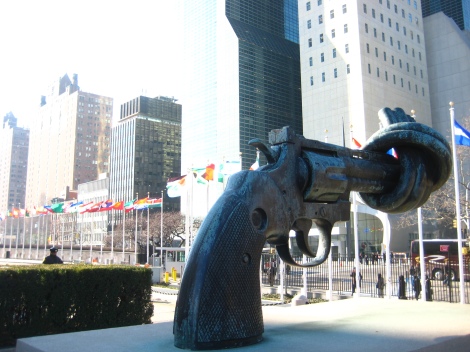 Last month, the day after I left Santa Rosa, Calif., a 13-year-old boy carrying a toy replica of an AK-47 was shot and killed on the outskirts of that town by a Sonoma County deputy sheriff with a reputation for being trigger-happy. The officer had ordered the boy to drop the “gun,†then in a matter of two or three seconds opened fire, giving him no chance to comply.
 innovation and reify bad policy decisions. Disagreement stimulates creative thinking and prompts innovation.
 “Repair . . . justice!†went the call and response last week, in the basement of an old Chicago church at the corner of Ashland and Washington. “Restore . . . life! Rebuild . . . community!â€
