War No More
Ten Years After the Invasion of Iraq, Are We Any Closer to Peace?
by Randall Amster
No one in power specifically called it “a date which will live in infamy,†but when the U.S. commenced the invasion of Iraq on March 19, 2003, it changed the political map of the world in ways we are still trying to disentangle. The basic idea that nations would only wage war for bona  fide reasons and with general support from the international community — tattered as those notions already were — was essentially laid to rest with the Iraq war. What is especially troubling is that we didn’t even need the benefit of hindsight to realize the full implications; in real time and without precedent, millions (perhaps even billions) around the world raised principled objections to the impending war before it commenced. Many people knew (and said) that it was illegal, unjust, and immoral, but to no avail. And so it goes…
A decade later, the fictitious rationales of “weapons of mass destruction,†liberating people from an evil dictator, promoting human rights, and “restoring democracy,†are almost laughable and are not seriously asserted as a viable basis for the war. (more…)
 globalization and digitization, humankind has been collectively taxing the planet’s carrying capacity and altering basic processes that have sustained our existence for eons. At this juncture, we cannot simply go back to a more pristine time (real or imagined), and the question of where we go from here is an open and urgent one.
 my children’s future. Yet our government continues to manufacture nuclear materials and unsafely store radioactive waste in clear violation of the public trust.Nowhere is this more visible than at the Hanford Nuclear Reservation, the most radioactively contaminated site in the western hemisphere, where we now know radioactive sludge is leaking badly from at least six underground tanks. While Hanford is technically in Washington State, the management of this catastrophe is vitally important to the rest of the nation — indeed, the biosphere. Unfortunately, environmental disasters do not stop at city, state, or national borders.
 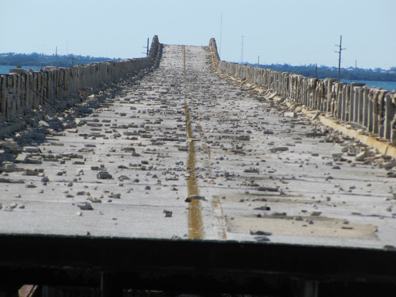 hippies). When a grassroots wing of the environmental movement went after road building and pavement (tarmac) two decades ago, it was quite fringy for mainstream enviros. Then when we went after plastics a decade ago, this too was considered “out there,” and kept low on the list of concerns for the average campaigner.
 made the Creek beautiful, the only stretch of land that had the appearance of wild nature. I used to bike or walk some of the length of the Creek alone or with my dog.
 Outside the “radical fringes†of the political spectrum, the silence is almost deafening. This is despite the palpable and (by now) incontrovertible nature of the conjoined crises in our collective midst, as the nexus of economic, ecological, technological, and militaristic challenges before us deepens by the day. Drudgery, droughts, and drones, oh my! Reality possesses a “fantastic†quality that often makes it seem as if we’re moving through a colorized version of an old-school horror flick — a notion reified in the cultural near-obsession with trite invocations of the much-anticipated “zombie apocalypse.â€
Outside the “radical fringes†of the political spectrum, the silence is almost deafening. This is despite the palpable and (by now) incontrovertible nature of the conjoined crises in our collective midst, as the nexus of economic, ecological, technological, and militaristic challenges before us deepens by the day. Drudgery, droughts, and drones, oh my! Reality possesses a “fantastic†quality that often makes it seem as if we’re moving through a colorized version of an old-school horror flick — a notion reified in the cultural near-obsession with trite invocations of the much-anticipated “zombie apocalypse.† To me, the Twinkie tasted like Elmer’s Glue with sugar encased in a squishy sponge or pound cake. It was too chalky and gooey all at once. Hmm. Must have missed out on the Leave it to Beaver upbringing required, I imagine, to love a quasi-food like that.
