March 26, 2013
By: NCVeditor
Category: Culture, Ecology, Evaggelos Vallianatos
What I Tell My Students…
by Evaggelos Vallianatos
I have taught sporadically at several universities. My latest teaching is at Pitzer College that prides itself for its liberal and environmental values.
 I focus on the politics of agriculture, shedding light on an invisible giant making America on its image.
This is not the agriculture of Thomas Jefferson with the small family farmer all over the country. Rather this is the agriculture of big business. This is the agriculture that has sent rural America to oblivion, industrializing the countryside and, along with it, farming and food. And, yet, it remains out there, unspoken, beyond the daily discourse. Read the rest of this entry →
Comments (2)
March 25, 2013
By: NCVeditor
Category: Culture, Ecology, Jennifer Browdy
Becoming Part of Gaia’s Cure, Instead of What Ails Her
by Jennifer Browdy de Hernandez
I will never forget one hot summer day when I was about eight years old, and a Monarch butterfly took it into its head to land on my arm and delicately lick up my sweat with its long, probing tongue.
 I froze, wanting the Monarch to stay with me as long as possible, and watched with total fascination and delight as it balanced on my warm brown skin and enjoyed the salty treat I had to offer.
Eventually, with a graceful swish of its elegant wings, it rose up in the air and twirled off to land on a nearby stand of sweet-smelling pink milkweed flowers.
I felt blessed by the encounter, and ever after, when I see a Monarch I approach cautiously and respectfully proffer my arm, hoping to feel again the light touch of those fragile black legs and tiny tongue.
My childhood connection with Monarchs came to mind this week as I read the deeply disturbing news that “the number of monarch butterflies that completed an annual migration to their winter home in a Mexican forest sank this year to its lowest level in at least two decades, due mostly to extreme weather and changed farming practices in North America.†Read the rest of this entry →
Comments (3)
March 23, 2013
By: NCVeditor
Category: David Swanson, Economy, Politics
It’s Not Too Late for Reparations and Prevention
by David Swanson
At 10 years since the launch of Operation Iraqi Liberation (to use the original name with the appropriate acronym, OIL) and over 22 years since Operation Desert Storm, there is little evidence that any significant number of people in 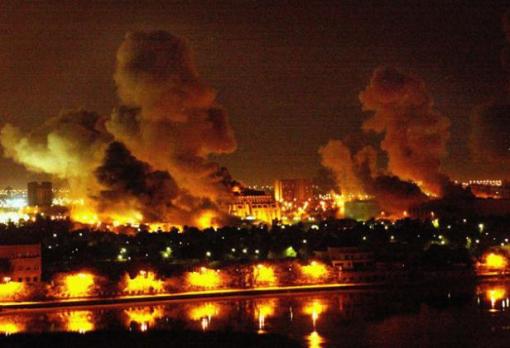 the United States have a realistic idea of what our government has done to the people of Iraq, or of how these actions compare to other horrors of world history. A majority of Americans believe the war since 2003 has hurt the United States but benefited Iraq. A plurality of Americans believe, not only that Iraqis should be grateful, but that Iraqis are in fact grateful.
A number of U.S. academics have advanced the dubious claim that war making is declining around the world. Misinterpreting what has happened in Iraq is central to their argument. Read the rest of this entry →
Comments Off on Ever Shocked, Never Awed
March 22, 2013
By: NCVeditor
Category: Politics, Robert C. Koehler
Building Peace Is Building the Future…
by Robert C. Koehler
We’ve lost a war without being able to surrender — and thus divest ourselves of the consciousness that got us into it. We are unable to look honestly at what we did and why, and determine not to do it again.
 My friend Catherine Menninger sent me a note the other day that began: “The days are long past when the poison of DU (depleted uranium) was our shared preoccupation. Now an even deeper poison, a soul poison, is seeping into the body politic and beyond. It is touching us all.â€
Ten years later, an enormous question looms: How do we get the poison out of our system? I think that’s what atonement means.
In a lengthy report on the Iraq war, David Swanson has placed it “among the world’s worst events,†a profoundly serious allegation that makes it far more than a “mistake.†Read the rest of this entry →
Comment (1)
March 21, 2013
By: NCVeditor
Category: Ecology, Politics, Randall Amster
Ten Years After the Invasion of Iraq, Are We Any Closer to Peace?
by Randall Amster
No one in power specifically called it “a date which will live in infamy,†but when the U.S. commenced the invasion of Iraq on March 19, 2003, it changed the political map of the world in ways we are still trying to disentangle. The basic idea that nations would only wage war for bona  fide reasons and with general support from the international community — tattered as those notions already were — was essentially laid to rest with the Iraq war. What is especially troubling is that we didn’t even need the benefit of hindsight to realize the full implications; in real time and without precedent, millions (perhaps even billions) around the world raised principled objections to the impending war before it commenced. Many people knew (and said) that it was illegal, unjust, and immoral, but to no avail. And so it goes…
A decade later, the fictitious rationales of “weapons of mass destruction,†liberating people from an evil dictator, promoting human rights, and “restoring democracy,†are almost laughable and are not seriously asserted as a viable basis for the war. Read the rest of this entry →
Comments (2)
March 20, 2013
By: NCVeditor
Category: Family, Kathy Kelly, Politics
A Civilized Country Would Heed the Call for Healing
by Kathy Kelly
Ten years ago today, Iraqis braced themselves for the anticipated “Shock and Awe†attacks that the United States was planning to launch against them. The media buildup for the attack assured Iraqis that barbarous assaults were  looming. I was living in Baghdad at the time, along with other Voices in the Wilderness activists determined to remain in Iraq, come what may. We didn’t want U.S.-led military and economic war to sever bonds that had grown between ourselves and Iraqis who had befriended us over the past seven years. Since 1996, we had traveled to Iraq numerous times, carrying medicines for children and families there, in open violation of the economic sanctions which directly targeted the most vulnerable people in Iraqi society — the poor, the elderly and the children. Read the rest of this entry →
Comment (1)
March 19, 2013
By: NCVeditor
Category: Economy, Guest Author, Politics
Hard Realities Ten Years After a Preventable War
by Robert F. Dodge
This week marks the 10th anniversary of the start of the Iraq War. As one of the longest and one of the most costly wars in U.S. history, the true costs in dollars, lives, environmental contamination and opportunity costs may never be fully appreciated.  This  “preventive war†waged on our behalf has forever tainted the world view and standing of the U.S. Disregarding international and domestic public opinion and international law before the war, this illegal war was destined to happen regardless of that opinion. Perhaps the most significant outcome of the war is the identification and clarification, a “How To†of what doesn’t work in resolving international conflict. Namely war itself.
Dollar estimates of the combined war costs range from $1.4 trillion to $4 trillion dollars spent and obligated or a bill of between $4,500 and $12,742 for every man, woman and child in the U.S. Read the rest of this entry →
Comments (4)

