Financial Insecurity
Good for Low-Energy Survival on a Changing Planet
by Jan Lundberg
The changing world leaves behind the money = wealth syndrome. We can see the trend gaining momentum in accord with the slow but sure shift in values toward universal ecological living.
 The too-successful human species catches up with nature-based realism upon questioning the side-effects of destructive technologies. We are not yet all on the same page, but human consciousness may turn on a dime, like global climate when it reaches a tipping point. The latter may have to happen to enable the former.
Knowledge of the global trend to redefine wealth and security helps sustain those who understand and welcome fundamental change and its associated challenges. But many who staked their lives on jobs, property, consuming, owning stocks, etc. will be bewildered as they discover what their ancestors knew: wealth is much more than money. (more…)
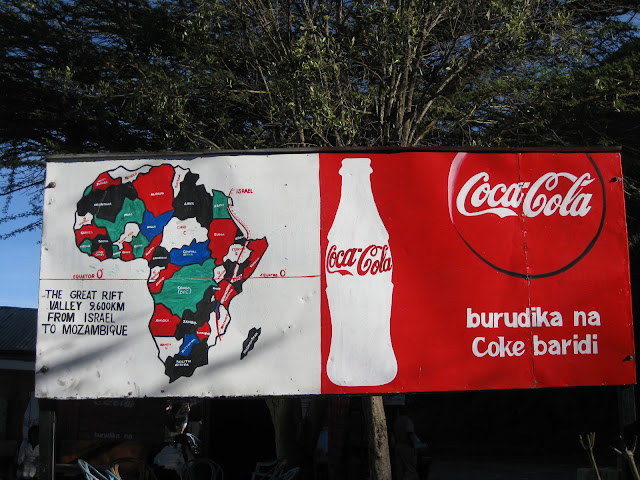 intensified with the growth of tourism and, especially, eco-tourism, which has become deeply entangled with this region. Anthropologists and other social scientists have joined the debate. Honey (2009) looked at so-called community eco-tourism at the national level and reveals numerous shortcomings, but is still in favor of the promotion of tourism and seeks equitable distribution of economic assets to more directly benefit the indigenous communities.
  So what’s this amazing treatment, which also happens to be easy, enjoyable and virtually free? It’s as simple as taking a walk.
 For instance, who knew that chocolate éclairs and triple fudge caramel brownies actually contain fewer calories than a 12-ounce glass of skim milk? Or that every $1,000 you spend on lavish vacations before the age of 65 will, over the long run, provide you with more retirement income than if you’d stashed that same $1,000 in a 401k?
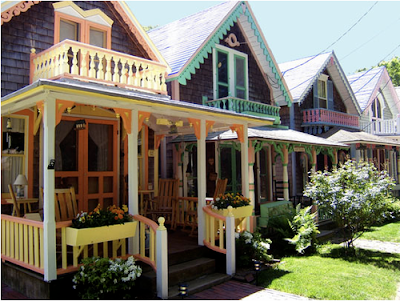 most tied up with the American dream — the home. Especially in the face of 2008’s economic crisis, more and more Americans are embracing the “Tiny House Movement,†in which each square foot is utilized to its full potential. Living small is, in its own way, a form of subversion: It decommodifies the idea of “home,†promotes a DIY (Do It Yourself) ethic in one the largest sectors of the U.S. economy, and places control back into the hands of homeowners instead of finance capitalists, speculators and the global market.
 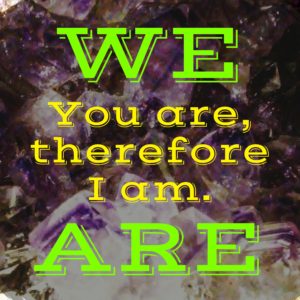 Islam: “No one of you is a believer until he desires for his brother what he desires for himself.†Christianity: “Do unto others as you would have them do unto you.†Erikson’s theme was the creative potential of mutuality — between spouses, parents and children, doctors and patients, teachers and pupils, even between nations. Mutuality, Erikson asserted, is a relationship in which partners depend upon each other for the enhancement of their respective strengths.  The curiosity of a student elicits from the teacher the skills for transmitting the excitement of learning in a way that benefits both teacher and student.
