New Clear Vision


constructive commentary for the chronically farsighted


Archive for the ‘Ecology’

Breton Fisherman’s Prayer

September 05, 2012 By: NCVeditor Category: Ecology, Economy, Politics, Robert C. Koehler

Can We Reclaim Our Reverence for the Planet that Sustains Us? 

by Robert C. Koehler 

“Oh God, thy sea is so great and my boat is so small.”

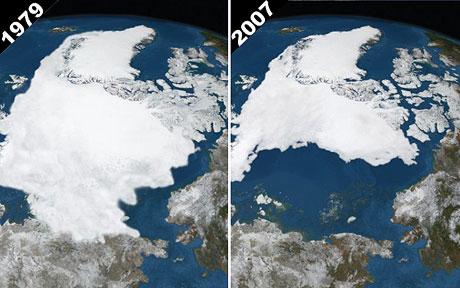
The Arctic ice is melting at a record pace this summer — just one more measurable phenomenon indicating that extraordinary change in the global ecosystem is in progress. As the ice melts, and the vast polar reflecting surface diminishes, the planet absorbs more and more of the sun’s energy and . . . grows warmer. More ice melts.

So what? Sitting at my desk in Chicago, I was tempted to opt out of caring about this — trend Republican, you might say. Put it on the back, ahem, burner. It takes a leap of consciousness to align my own well-being with the fate of the Arctic ice, the ocean, the Inuits, the polar bears. (more…)
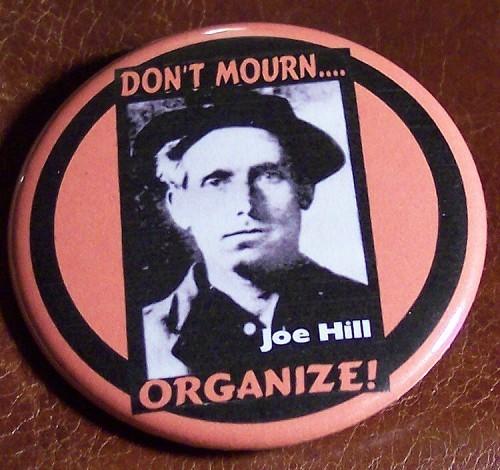
Don’t Mourn, Organize!

September 03, 2012 By: NCVeditor Category: Ecology, Peter Bergel, Politics

Working Together to Address Threats Ignored by Dysfunctional Government

by Peter Bergel

In my email recently was a message from one of my favorite organizations, the League of Conservation Voters, that began: “We just won a major victory: The Obama administration has finalized new fuel efficiency and global warming pollution standards that will raise the average gas mileage on cars to 54.5 mpg by 2025. Simply put, this is the single biggest thing the United States government has ever done to reduce global warming pollution.” The League urged me to thank President Obama “for protecting our planet.”

I know I should not look a gift horse in the mouth, but I have to admit that my reaction was “really?”

Modest Achievement

This “biggest thing,” raises average mileage on cars by 2025 — 13 years from now. Obama will be long out of office by then and the auto industry will have plenty of time to work on chiseling that mileage figure down. Besides, why did it take Obama nearly 4 years to get around to this? And why is the mileage figure so low? (more…)

Occupy the Media

August 24, 2012 By: NCVeditor Category: Culture, Ecology, Guest Author

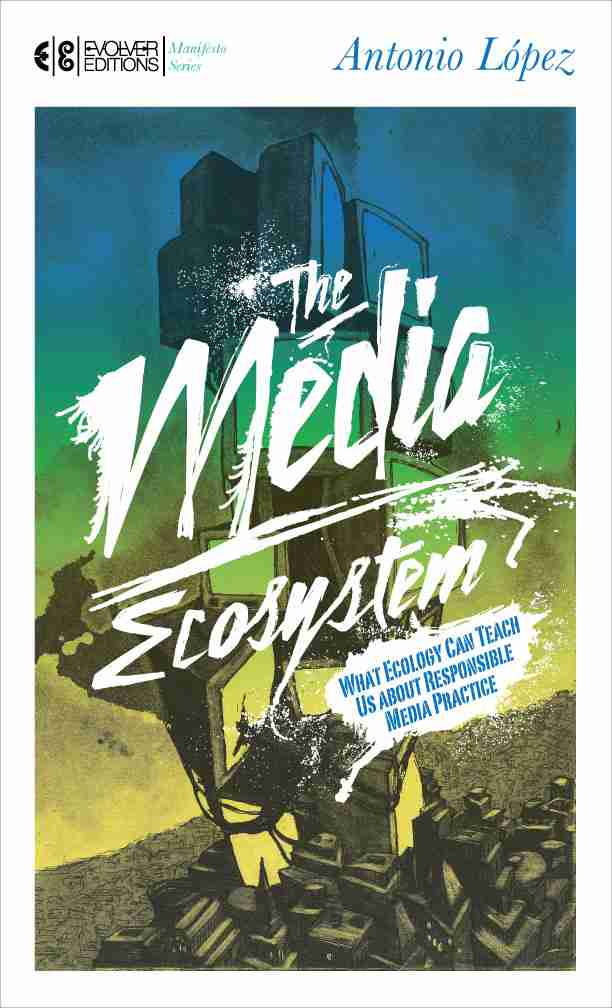
What Ecology Can Teach Us About Responsible Media Practice

by Antonio López

New media and cultural practices mirror each other in the same way that contemporary gamers now view the world differently than gamers of old. Consider how baseball evolved with radio. Its slow pace is perfect for the narrative storytelling style of the oral tradition. American football, on the other hand, is perfect for television, its visually impressive and vignette-driven coverage timed perfectly for the commercial break. In both cases, though, their dissemination requires top-down distribution and offers clear and definitive outcomes, making them excellent fodder for discussion, distraction, and catharsis. Not surprisingly, politics have come to mirror sports spectacles with teams (parties) and strategies (platforms) that have a way of eschewing actual discussion of issues, substituting real politics with horse-race-like coverage.

No wonder the native intellectuals of the colonial media system can’t deal with the open-ended politics of kids raised on “infinite” games. Infinite games are about keeping the gameplay going, not about definitive winners and losers. The goal of infinite games is not an “end game” — as so many corporate media pundits search for in the narrative of the movement — but sustainability. How do you keep it going? “It,” in our case, is just life for those of us who want to raise our children on a healthy planet and in a prosperous and just society. (more…)

Bigger, Not Better

August 23, 2012 By: NCVeditor Category: Community, Ecology, Economy, Evaggelos Vallianatos

Large Farms Are the Emperors of Rural America

by Evaggelos Vallianatos

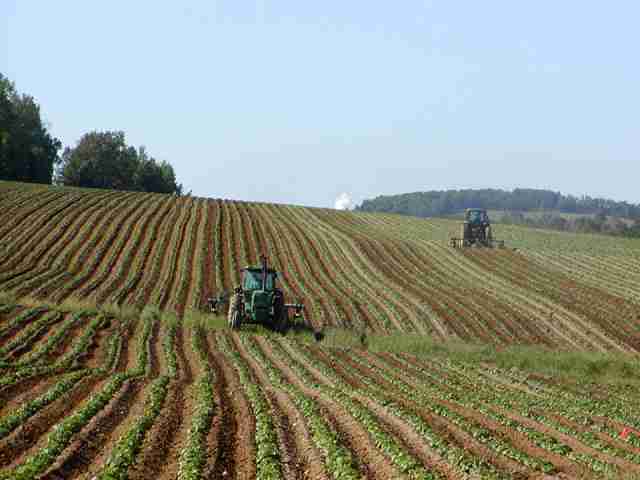
Large farmers, with farms thousands of acres in size, have tremendous power.

You can visualize that power standing on the border of any such large farm. You see nothing but the horizon in the far distance touching the flat land. Coming as I did from Greek culture where farms are tiny, each bordering the neighboring farm with beautiful small stone walls or trees, the vast expanse of merely land without any fences or houses or trees, is always shocking. But after my bewilderment wears thin, I realize these monstrous farms produce most of America’s food.

Large farmers are the emperors of rural America. The federal government lavishes more than $20 billion of subsidies on them every year. Other long-term subsidies in water, science and technology are worth trillions. (more…)

Affluence Out on a Limb

August 10, 2012 By: NCVeditor Category: Culture, Ecology, Economy, Jan Lundberg

An American’s Letter from Europe

by Jan Jundberg

The time for a revolution of a deeper sort comes when the imbalance of unequal sharing of the land and its resources reaches the ultimate crisis point. People don’t want to contemplate this, but at least the unprecedented socioeconomic disintegration ahead will be the portal to achieving real sustainability.

This will occur despite any redistribution of present wealth through compassionate reforms or wrenching de-classism. For the hour is too late ecologically. This applies to the entire modern industrialized world.

A great measure of middle and working class affluence has brought European nations together. Rather than serving lofty goals of advancing civilization and peace, it was more to convenience the region’s powerful corporations and increase Europe’s bargaining muscle for importing energy. Digging deeper into the seamy side, the elevated material life was accomplished largely by borrowing money and wasting material resources (albeit only half as recklessly as the U.S., per capita). The come-down will be far more painful and chaotic than what has been glimpsed, such as the Spanish miners’ objections to their getting squeezed. The bright side is that the failure of affluence — of the post-war European Dream — will give way to strong local economics and bioregional power. (more…)

Material Manifestations

August 09, 2012 By: NCVeditor Category: Culture, Ecology, Guest Author, Jay Walljasper

What Do We Lose When Experiences Go Extinct? 

by Chris Desser 

Over many years as an activist, attorney and artist working on environmental campaigns, Chris Desser began to wonder about the sensual pleasures that will disappear from our lives as more and more species go extinct. That was the genesis of her “Catalog of Extinct Experiences” — a multimedia installation at San Francisco’s Fort Mason Center planned for the Fall of 2013.

“At its most basic, as we lose these experiences we lose ways of coming to consciousness,” Desser explains. “These things are all part of the commons — these experiences belong to all of us.

Some of the exhibits that she is planning for the exhibition include: images of endangered landscapes preserved in jars, like extinct species preserved in formaldehyde; recordings of soundscapes from rainforests, deserts and other threatened places; vials of perfumes made from endangered plants; honey flavored by various flowers, with empty jars for extinct species; commissioned and curated work from other artists.

(more…)

Urban Farms or Myths?

August 02, 2012 By: NCVeditor Category: Community, Culture, Devon G. Pena, Ecology

Feeding Ourselves, Our Cities, and the World…

by Devon G. Peña

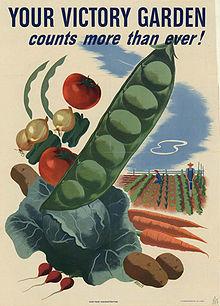
The excitement surrounding urban agriculture is partly rooted in a notable history and possible future capacity to actually help feed the entire nation. During the Second World War, so-called ‘Victory Gardens’ provided close to half of the fruits and vegetables consumed by the population; albeit, people in those days ate smaller, healthier portions. Perhaps the revival of urban farming will lead not just to a diet for a small planet but a diet for smaller people?

Victory Gardens, a.k.a. ‘War Gardens’, played a major role in the mobilization of the civilian population during the two world wars but were especially important during the Second World War. Most reliable estimates confirm that 40 to 50 percent of the fruits and vegetables consumed during this period were grown in urban gardens.

The return of urban farming echoes these monumental efforts of the past, but the new ‘Victory Gardens’ are about a victory over poverty, hunger, malnutrition, and the dissolution of community ties. The phenomenal success and rapid growth of urban farming has created extraordinary opportunities for food justice and an ecologically superior, community-based approach to reinvention of our current food system, which is dominated by unsustainable and inequitable industrial models and a profit-driven top-down corporate anti-nature and anti-worker rationality. (more…)

  • Welcome to NCV

    A (relatively) NEW blog filled with (generally) CLEAR intentions and a (positive) VISION for the future.
  • Latest Posts

  • GONE, NOT FORGOTTEN

    Since launching in 2010, we featured many inspiring writers on cutting-edge issues. In times of escalating crises, we sought to remain proactive rather than perpetually reactive, to not give more power to those who would co-opt the agenda, and to try turning visions in practice. We can critique what is and offer insights into what could be, without becoming embittered in the process. We weren't partisan, but we'll always stand on the side of those who desire peace with justice. We're not posting anymore new content as of 2017, but our archive will remain up and you can still find us on social media. We'll see you in the interwebs...
  • New! Thematic ‘Zines

  • Tags

  • Archives

  • NCV Bookmarks

    Peace Ecology
  • Green by DreamHost

    carbon neutral * renewable energy
    Green Web Hosting! This site hosted by DreamHost.