New Clear Vision


constructive commentary for the chronically farsighted


Archive for the ‘David Swanson’

What Will We Do?

December 25, 2012 By: NCVeditor Category: Culture, David Swanson, Politics

What the Soldiers Did on Christmas 98 Years Ago

by David Swanson

Frank Richards recalled:

“On Christmas morning we stuck up a board with ‘A Merry Christmas’ on it. The enemy had stuck up a similar one. Platoons would sometimes go out for twenty-four hours’ rest — it was a day at least out of the trench and relieved the monotony a bit — and my platoon had gone out in this way the night before, but a few of us stayed behind to see what would happen. Two of our men then threw their equipment off and jumped on the parapet with their hands above their heads. Two of the Germans done the same and commenced to walk up the river bank, our two men going to meet them. They met and shook hands and then we all got out of the trench.

“Buffalo Bill [the Company Commander] rushed into the trench and endeavoured to prevent it, but he was too late: the whole of the Company were now out, and so were the Germans. He had to accept the situation, so soon he and the other company officers climbed out too. We and the Germans met in the middle of no-man’s-land. (more…)

Stop the Violence

December 16, 2012 By: NCVeditor Category: Current Events, David Swanson, Politics

We Must Work for Peace if We Want It

by David Swanson

The troubled souls (generally known in the media as “monsters” and “lunatics”) who keep shooting up schools and shopping centers, believe they are solving deeper problems. We all know, of course, that in reality they are making things dramatically worse.

This is not an easy problem for us to solve. We could make it harder to obtain guns, and especially guns designed specifically for mass killings. We could take on the problem with our entertainment: we have movies, television shows, video games, books, and toys promoting killing as the way to fix what ails us. We could take on the problem of our news media: we have newspapers and broadcast chatterers promoting killing as a necessary tool of public policy. We could reverse the past 40 years of rising inequality, poverty, and plutocracy — a trend that correlates with violence in whatever country its found. (more…)
Incompatible Aristocracy

December 12, 2012 By: NCVeditor Category: David Swanson, Economy, Politics

The Rich Don’t Always Win…

by David Swanson

Many of us have heard the current period referred to as a second gilded age.  Or we’ve seen the current inequality in wealth in the United States compared to that of 1929.  But we have not all given sufficient thought to what ended the first gilded age, what created greater equality, what created the reality behind that category our politicians now endlessly pretend we are all in: the middle class.  We have a sense of what went wrong at the turn of each century, but what went right in between?

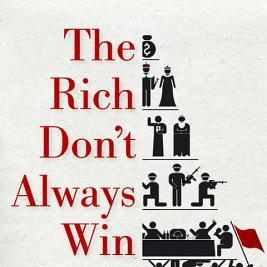
This is the theme of Sam Pizzigati’s new book, The Rich Don’t Always Win: The Forgotten Triumph Over Plutocracy That Created the American Middle Class, 1900-1970.  I take away three primary answers short enough to include in a brief summary. First, we taxed the riches right out from under the rich people.  Second, we empowered labor unions.  And third — and this one came first chronologically as well as logically — we developed a culture that saw it as absolutely necessary for the greater good that the rich be made poorer. (more…)

Military Abolition Day

November 30, 2012 By: NCVeditor Category: David Swanson, Economy, Politics

Marking December 1st as a Day of Peace

by David Swanson

I’ve been fond of December 1st ever since I was born on it.  I later found out that it had been on a December 1st that Rosa Parks had sat down and refused to stand up or move to the back of that racist bus in Montgomery.  Later still I found out about a December 1st that had happened still earlier.

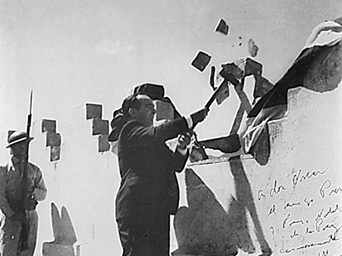
It was on December 1, 1948, that President José Figueres Ferrer of Costa Rica abolished the military of Costa Rica.  He didn’t “cut” its projected dream budget by a teeny fraction that sounded bigger if multiplied by 10 and announced as a reduction “over 10 years.”  He didn’t cut it in the ordinary sense of actually cutting it.  He abolished it.  Costa Rica put its military in a museum and a museum in its military headquarters.  It turned its military bases into schools.  It turned its military budget into a fund for useful projects.  In 1986, President Oscar Arias Sánchez declared December 1st the Día de la Abolición del Ejército (Military Abolition Day). (more…)

Echoes of Howard Zinn

November 27, 2012 By: NCVeditor Category: David Swanson, Politics

The More Things Change, the More We Need His Words

by David Swanson

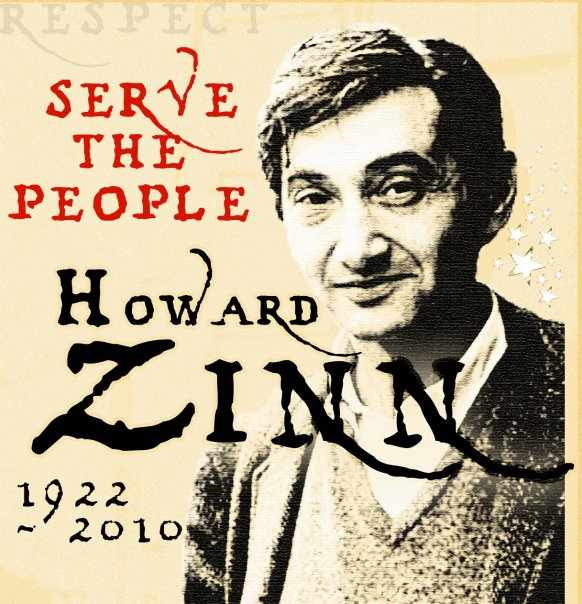
We’re approaching three years since Howard Zinn left us, and to my ear his voice sounds louder all the time.  I expect that effect to continue for decades and centuries to come, because Zinn spoke to enduring needs.  He taught lessons that must be relearned over and over, as the temptations weighing against them are so strong.  And he taught those lessons better than anybody else.

We like to use the word “we,” and to include in it everything the Constitution pretends to include in it, notably the government.  But the government tends to act against our interests.  Multi-billionaires, by definition, act against our interest.  Zinn warned us endlessly of the danger of allowing those in power to use “we” to include us in actions we would otherwise oppose.  It’s a habit we carry over from sports to wars to economic policies, but the danger of a spectator claiming “we scored!” doesn’t rise to the same level as millions of spectators claiming “we liberated Afghanistan.”

We like to think of elections as a central, important part of civic life, and as a means of significantly impacting the future.  Zinn not only warns against that misperception with incisive historical examples, and with awareness of the value of the struggle for black voting rights in the Southern United States, but he was a part of that struggle and warned against misplaced expectations at the time. (more…)

Irrational Voting

November 01, 2012 By: NCVeditor Category: Current Events, David Swanson, Politics

Resisting the Tendency Toward Lesser-Evilism

by David Swanson

When I was a philosophy grad student in the ancient times at the University of Virginia, some over-smart logician pointed out to me that voting is not rational, since a single vote is never decisive. It’s all the other stuff that’s rational: appearing to have voted, applying a sticker to your bumper, registering voters, making phone calls — because all of that stuff has the potential to spread sufficiently to make a difference in the election, or perhaps in a future election or in other forms of civic engagement.

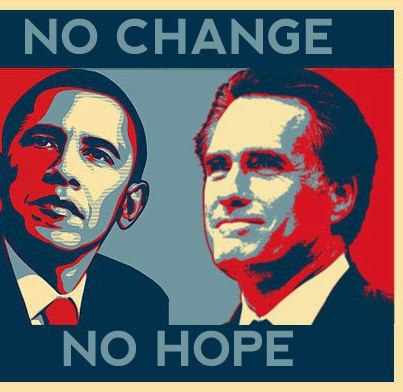
But, of course, unlike the model “persons” in philosophical or economic mental experiments, actual people tend not to be sociopaths. Pretending to vote without voting is far more work than actually voting, which — while it may be irrational — does no harm. And so, good citizens tend to vote even understanding its irrationality, and even when there are no candidates worth voting for.

Some smart friends of mine argue for a particular type of quasi-rational voting in such situations. (more…)

Citizen Diplomacy

October 11, 2012 By: NCVeditor Category: Current Events, David Swanson, Politics

Can It Still Save Us?

by David Swanson

For as long as there’s been a United States of America, its private citizens have done some of its best diplomacy.  In 1798 Dr. George Logan eased tensions between France and this country.  He got a law named for him, criminalizing such services, but nobody’s ever been prosecuted under it — probably because the crime prosecuted would itself be the act of crime prevention.

One of my favorite cases, recounted in When the World Outlawed War, involved James Shotwell, who worked for the Carnegie Endowment for Peace (created by Andrew Carnegie to work exclusively on abolishing war, and currently working on everything but).

In 1927, Shotwell drafted a public statement for the Foreign Minister of France proposing to the United States the creation of a treaty criminalizing war.  When few took notice, Shotwell’s colleague Nicholas Murray Butler wrote a response to the Foreign Minister in the New York Times.  These two ventriloquists’ public diplomacy resulted in a treaty banning war to which the United States, France, and 79 other nations are party today. (Ssh! Don’t tell them.) (more…)

  • Welcome to NCV

    A (relatively) NEW blog filled with (generally) CLEAR intentions and a (positive) VISION for the future.
  • Latest Posts

  • GONE, NOT FORGOTTEN

    Since launching in 2010, we featured many inspiring writers on cutting-edge issues. In times of escalating crises, we sought to remain proactive rather than perpetually reactive, to not give more power to those who would co-opt the agenda, and to try turning visions in practice. We can critique what is and offer insights into what could be, without becoming embittered in the process. We weren't partisan, but we'll always stand on the side of those who desire peace with justice. We're not posting anymore new content as of 2017, but our archive will remain up and you can still find us on social media. We'll see you in the interwebs...
  • New! Thematic ‘Zines

  • Tags

  • Archives

  • NCV Bookmarks

    Peace Ecology
  • Green by DreamHost

    carbon neutral * renewable energy
    Green Web Hosting! This site hosted by DreamHost.