Sins of Omission
Three Things Young People Should Know to Save the World
by David Swanson
Of course, old people should know these things too, and some small percentage does know them, but energy seems better invested in trying to teach them to young people who have less to unlearn in the process…
 1. Obedience is extremely dangerous.Â
This seems like it must be either wrong or misleadingly incomplete. And that would be true if we were talking about children. If a two-year-old is about to run in front of a car, please do yell “stop!” and hope for as much obedience as possible. But I’m talking to young people, not children.
When you grow up, your obedience should always be conditional. If a master chef appears to be instructing you to prepare a revoltingly bad dinner but wants you to obey his or her instructions on faith, you might very well choose to do so, considering the risk to be tolerable. If, however, the chef tells you to chop off your little finger, and you do it, that will be a sure sign that you’ve got an obedience problem. (more…)
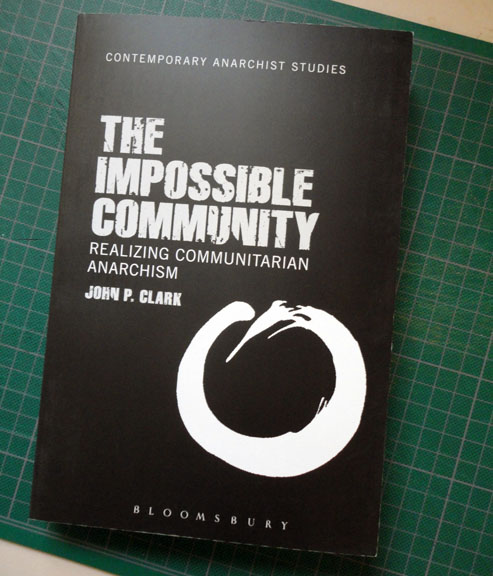 exploitation and domination of one another makes possible similar acts of violence against nature. As long as we remain oblivious to underlying flaws in our collective logic (i.e., that it is reasonable to endlessly consume non-renewable resources on a finite planet; that peaceful, just societies can emerge out of competitive, hierarchical frameworks) any responses we could devise will be insufficient to significantly alter our current course. A social ecological approach to “saving the environment†would require balancing relationships between humans and other humans, and between humans and all other phenomena. It sounds like a tall order…and it is. In light of the obvious destructive effects of systems within which we are obliged to strive for quantity of goods for one over quality of life for all, we are now faced with two choices: pull off the impossible, or perish.
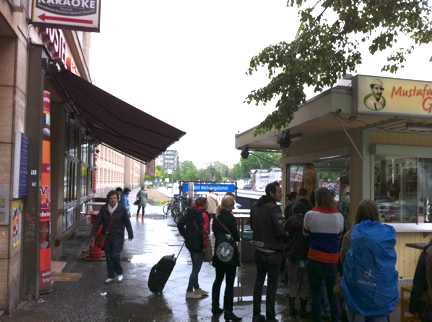 took my meditation break outdoors on a crowded but peaceful, umbrella-crammed street. Not surprisingly, a thought came to me.
 the central cause of the Arab Spring of 2011.  In Syria, the drought of 2006-2011 left 75% of farmers from the northeast and south with total crop failure. He writes that: “According to the UN, 800,000 Syrians had their livelihoods totally wiped out.  One researcher notes that ‘the single factor that triggers riots around the world is food.’â€Â  In 2007, 48 countries experienced food riots.
 science fiction, historical fiction, dramas, and reenactments pre-censored
  Syrian situation might have led to a war that ended the world.
