New Clear Vision


constructive commentary for the chronically farsighted


Bolivia’s Indigenous Roots Remain

February 22, 2011 By: NCVeditor Category: Community, Culture, Ecology, Jan Lundberg

A ‘Subtle Genocide’ Sparks Community in Cerro Rico

by Jan Lundberg

The scene of several million deaths at the hands of Spaniard invaders, Cerro Rico (“rich hill”) is just above the city of Potosí in Bolivia. In May 2010, I noted significant amounts of plastic debris all over the mountainside, but I couldn’t guess the source. The answer, from my local driver, is that the miners working in the mountain constantly use plastic bags for their daily coca supplies. Chewing the leaves provides stamina and curbs hunger.

It is ironic that the seemingly harmless but unsightly plastic serves as a relatively new source of devastation to the health of the community and the ecosystem. For anyone to dismiss this concern as irrelevant compared to the poor miners’ work conditions of yesterday and today is to let off the petroleum corporations and everyone down the line participating in a long-term tragedy affecting future generations. (more…)


In Defense of Schoolyard Gardens

February 21, 2011 By: NCVeditor Category: Community, Culture, Ecology, Guest Author

Youth Gardening as a Pathway to Academic Success

by Tessa James, Kalyn Janae Marab, and Sabine Parrish

Caitlin Flanagan’s 2010 article in The Atlantic, Cultivating Failure, ridicules the idea that schoolyard gardens can help children in any way become better educated.  Her principal argument is that gardens do not teach students the necessary skill sets to pass the standardized examinations required of most students across the nation:

“Here is the essential question we must ask about the school gardens: What evidence do we have that participation in one of these programs — so enthusiastically supported, so uncritically championed — improves a child’s chances of doing well on the state tests that will determine his or her future (especially the all-important high-school exit exam) and passing Algebra I, which is becoming the make-or-break class for California high-school students?”

Contrary to this statement, there is growing evidence that gardening cultivates not just crops but young minds. This includes teaching environmental consciousness — but gardening can also teach practical and applied lessons in science and math and is an engaging and creative way to explore natural and cultural history.  The question should not be, “Will our students pass these tests?” Instead, we might ask: “Why have we developed a system in which standardized tests determine our children’s future?” (more…)

Mexico Goes Back to the Land

February 17, 2011 By: NCVeditor Category: Community, Culture, Ecology, Guest Author

Peasant Farmers Grow Hope, Trust … and Food

by Gustavo Esteva

This is grim news: food prices are reaching record levels worldwide. The thousands of farmers who have killed themselves over the past decade seems to have no precedent. According to the United Nations Food and Agriculture Organization’s director, the goal to reduce the number of hungry people by half will only be achieved in 2050.

In Mexico, this is just another facet of the crisis that started in the 1980s, when the government dismantled its support for peasant farmers. “My obligation as minister of agriculture is to get rid of 10 million peasants,” declared Carlos Hank in 1991. “What are you going to do with them?” a journalist asked. “That is not my area of work,” he answered.

But no one assumed that responsibility. Vicente Fox, former president of Coca-Cola and president of Mexico from 2000 to 2006, used to say “those peasants can be gardeners in Texas.” For him and other policymakers, Mexico had too many peasants; America, their model, was producing food for the world with only 2.5% of the labor force. In 1992 they opened to the private market the land which had been in the hands of peasants since the 1910 revolution. The North American Free Trade Agreement, which came into force in 1994, consolidated this anti-peasant orientation in the name of free market. (more…)

Shoulders to the Wheel

February 11, 2011 By: NCVeditor Category: Community, Culture, Ecology, Randel Hanson

Laying the Foundations for Sustainable Local Food Systems

by Randel Hanson

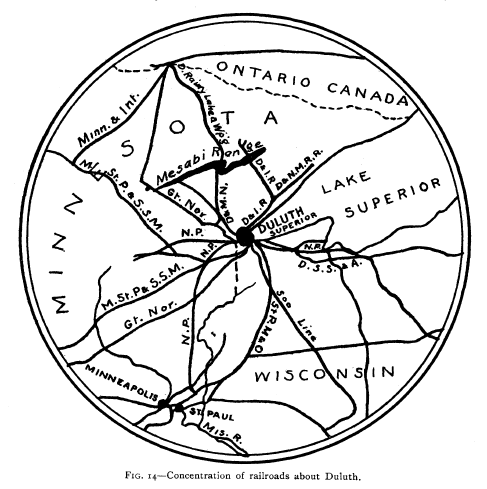
How do you create a locally harvested food system for a city of 100,000? This question is being asked presently in a seminar, in Duluth, Minnesota and the broader western Lake Superior region, as well as in many other cities across the United States. It was also an urgent local question a century ago.

Indeed, across the U.S. at the onset of the 20th century, public and private concerns were scrambling to get a handle on the haphazard ‘system’ that transformed nature into edible human culture within the rapidly urbanizing America. This was a chaotic, wasteful, and powerfully transformative period, with rural populations shifting into cities as the primary engine for economic activities turned from agrarianism to industrialization. The rapid growth of industrial cities forced an emerging ‘municipal responsibility’ for the various inputs and outputs of urban life. Public and private city planners in the late 19th century began to reflect upon and intervene into this laissez faire urbanization, including how to procure ample food of adequate quality and cost to citizens. In short, it became quite apparent that leaving the issue of food to the market was wholly inadequate to the demands of society from any number of perspectives. (more…)

Notes on the Solidarity Economy

February 02, 2011 By: NCVeditor Category: Community, Devon G. Pena, Ecology, Economy

Replacing the Predatory with the Complementary

by Devon G. Peña

By now it is eminently apparent that both Left- and Right-wing politicians alike have it wrong when it comes to re-imagining the future of “making stuff” in the U.S. The question is not just: What do we make?  It is also: How do we make it?

We can begin to answer this by presenting an ideal type in the form of a purely heuristic “imagine that…” type of exercise. The conceptual distinction I wish to make is between a “predatory” economy at one end of the continuum and a “solidarity” economy at the other. I invite readers to engage this exercise of exploring both ends of this continuum, for the sake of analytical discourse and concrete possibilities alike.

Indeed, while the problems before us are manifold, it is equally the case that the answers we seek are closer at hand than it might otherwise appear. (more…)

Apocalypse Not Now

February 01, 2011 By: NCVeditor Category: Community, Culture, Ecology, Politics, Randall Amster

In Search of a New Beginning … Before the End

by Randall Amster

Undertaking even a cursory review of the news queue evidences the apocalyptic overtones in our collective midst. In the most recent additions to the canon, 2010 ended with semi-sardonic coverage of the so-called “Snowpocalypse” and its aftermath, and 2011 began with perplexed musings over the “Aflockalypse” in which birds and fish seem to be dying in odd ways due to mystifying causes. Not long before, we had the perceptive invocation of the “Shopocalypse” by Reverend Billy and the Church of Stop Shopping, and next year’s 2012 allusions promise to spawn a new generation of nomenclatural evolutions.

While we may be tempted to dismiss the suffix “-ocalypse” being deployed much like “-gate” as an all-purpose distortion device, on another level we can also perceive that its very utilization as both a linguistic tool and interpretation of concrete outcomes is telling about the times in which we live. We’re actually in good company on this, at least historically speaking, as the sense of looming apocalypse has been woven into the fabric of Western civilization since its earliest days of recorded reckoning. And there certainly has been no shortage of cataclysmic harbingers in the modern era, from the inception of cinema itself to the invocation of the “mushroom cloud” as part of political theater. This is, in short, our cultural talisman, and its influence upon us is palpable. (more…)

Dreams of the Local Commissariat

January 28, 2011 By: NCVeditor Category: Community, Devon G. Pena, Ecology, Economy

Walmart, Food Deserts, and Genuine Sovereignty

by Devon G. Peña

Let us begin with a “defining moment,”  courtesy of the Oxford World Dictionary:

Commissariat (kɒmɪˈsɛːrɪət)

Definition: chiefly Military department for the supply of food and equipment.

Origin: late 16th century (as a Scots legal term denoting the jurisdiction of a commissary, often spelled commissariot): from French commissariat, reinforced by medieval Latin commissariatus, both from medieval Latin commissarius ‘person in charge’, from Latin committere ‘entrust’

How does this relate to the news cycle? Well, on January 20, Walmart announced plans to reformulate the ingredients of their in-house or private brand processed foods. An estimated 60 percent of the company’s annual grocery revenues are currently tied to the sale of processed food items. It is therefore expected that this formula change will place pressure on other private suppliers to follow suit. (more…)

  • Welcome to NCV

    A (relatively) NEW blog filled with (generally) CLEAR intentions and a (positive) VISION for the future.
  • Latest Posts

  • GONE, NOT FORGOTTEN

    Since launching in 2010, we featured many inspiring writers on cutting-edge issues. In times of escalating crises, we sought to remain proactive rather than perpetually reactive, to not give more power to those who would co-opt the agenda, and to try turning visions in practice. We can critique what is and offer insights into what could be, without becoming embittered in the process. We weren't partisan, but we'll always stand on the side of those who desire peace with justice. We're not posting anymore new content as of 2017, but our archive will remain up and you can still find us on social media. We'll see you in the interwebs...
  • New! Thematic ‘Zines

  • Tags

  • Archives

  • NCV Bookmarks

    Peace Ecology
  • Green by DreamHost

    carbon neutral * renewable energy
    Green Web Hosting! This site hosted by DreamHost.