Peace Lessons
New Book Covers Familiar Terrain with Original Perspective
by David Swanson
I just read what may be the best introduction to peace studies I’ve ever seen. It’s called Peace Lessons, and is a new book by Timothy Braatz. It’s not too fast or too slow, neither obscure nor 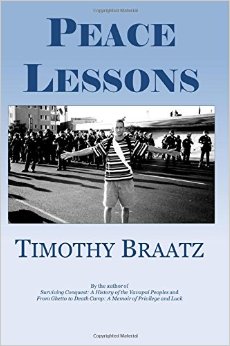 boring. It does not drive the reader away from activism toward meditation and “inner peace,†but begins with and maintains a focus on activism and effective strategy for revolutionary change in the world on the scale that is needed. As you may be gathering, I’ve read some similar books about which I had major complaints.
No doubt there are many more, similar books I haven’t read, and no doubt most of them cover the basic concepts of direct, structural, and cultural violence and nonviolence. No doubt many of them review the 20th century history of nonviolent overthrows of dictators. No doubt the U.S. civil rights movement is a common theme, especially among U.S. authors. Braatz’s book covers this and other familiar territory so well I was never tempted to set it down. He gives some of the best answers available to the usual questions from the dominant war-based culture, as well: “Would you shoot a crazed gunman to save your grandma?†“What about Hitler?†(more…)

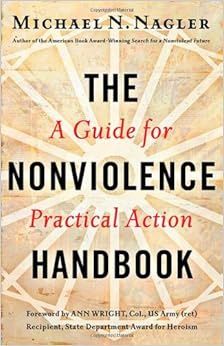 collection of misguided platitudes, this book proposes what still remains a radically different way of thinking, a habit of living that is not in our air. In fact, Nagler’s first piece of advice is to avoid the airwaves, turn off the television, opt out of the relentless normalization of violence.
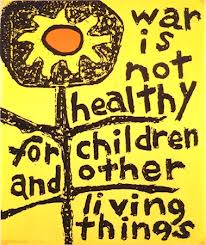 other living things. It actually proves that defenders of war are growing desperate for arguments.
 a millennium, we ought to be able to judge work on its merit — and we ought to have regular celebrations of Erasmus around the world. Some of his ideas are catching on. His name is familiar in Europe as that of the EU’s student exchange program, named in his honor. We ought perhaps to wonder what oddball ideas these days might catch on in the 2500s — if humanity is around then.
 California’s prison system has continually made news this past year. Over 30,000 people rocked its prison system with a mass hunger strike that lasted nearly 60 days.  News about coerced sterilizations in its women’s prisons shocked and outraged prisoner rights and reproductive justice activists, leading to legislative hearings. At least two prison sites were found to be toxic. People sentenced under California’s Three Strikes continue to languish in prison and the numbers of prisoners aged 55 or older have increased by over 500% between 1990 and 2009. To top it off, Governor Brown continues to resist the 2011 Supreme Court order to decrease prison overcrowding.
California’s prison system has continually made news this past year. Over 30,000 people rocked its prison system with a mass hunger strike that lasted nearly 60 days. Â News about coerced sterilizations in its women’s prisons shocked and outraged prisoner rights and reproductive justice activists, leading to legislative hearings. At least two prison sites were found to be toxic. People sentenced under California’s Three Strikes continue to languish in prison and the numbers of prisoners aged 55 or older have increased by over 500% between 1990 and 2009. To top it off, Governor Brown continues to resist the 2011 Supreme Court order to decrease prison overcrowding.
