The Moment Is Now!
African Civil Resistance in 2015
by Matt Meyer
“I am younger than I was YEARS AGO!†proclaimed South African activist Zenzile Khoisan, known to many around the world as the exiled freedom fighter who spent many years in New York City as an intrepid reporter for Pacifica  radio. A skilled journalist, he returned to his homeland as a lead investigator for the Truth and Reconciliation Commission. Khoisan’s optimistic outlook in the face of increasingly bleak domestic conditions is not only a grand way to start the new year, or – as it were – to start the first morning plenary of the War Resisters’ International (WRI) conference held at Cape Town’s historic City Hall. It is also symptomatic of the hope still evident in the country with the current highest per capita rate of mass mobilizations, civil society protests, labor strikes, and general unrest. It is a fitting cry of exuberance and excitement from a continent bubbling over with grassroots initiatives and actions in every corner of its vast land mass, built by diverse people who are coming together with growing enthusiasm and a unified perspective that the power of the people – greater than any government or even transnational corporate giant – will be the determining factor in the years to come. (more…)

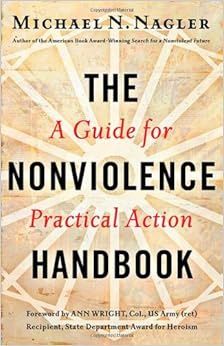 collection of misguided platitudes, this book proposes what still remains a radically different way of thinking, a habit of living that is not in our air. In fact, Nagler’s first piece of advice is to avoid the airwaves, turn off the television, opt out of the relentless normalization of violence.
 other living things. It actually proves that defenders of war are growing desperate for arguments.
 RodrÃguez pre-selected the blogs and I did final copy-editing and formatting but the ideas and representations made here were entirely the result of the eight weeks of group research activities conducted by these young students.Â
RodrÃguez pre-selected the blogs and I did final copy-editing and formatting but the ideas and representations made here were entirely the result of the eight weeks of group research activities conducted by these young students.  “In every work of genius we recognize our own rejected thoughts: they come back to us with a certain alienated majesty.â€Â What if?
 a millennium, we ought to be able to judge work on its merit — and we ought to have regular celebrations of Erasmus around the world. Some of his ideas are catching on. His name is familiar in Europe as that of the EU’s student exchange program, named in his honor. We ought perhaps to wonder what oddball ideas these days might catch on in the 2500s — if humanity is around then.
