New Clear Vision

constructive commentary for the chronically farsighted
Subscribe

A Gospel of Wealth

December 28, 2012 By: NCVeditor Category: Culture, Economy, Robert C. Koehler

Making Eye Contact with the Poverty in Our Midst

by Robert C. Koehler

“I’m pregnant,” she said.

Well, OK. She wanted $4. I could have done the “pretend not to see you” thing. Taking that option is part of life these days, especially in Chicago. She’d been standing in the middle of the intersection, trying to get money so that — if she was to be believed — she and her daughter could get dinner at the McDonald’s on the corner. When the light changed, she came over to me. I was out for a walk. It was a beautiful, cold December night.
This is what I’d been thinking: “We are not human beings having a spiritual experience; we are spiritual beings having a human experience.” It was a quote from one of my favorite writers, Pierre Teilhard de Chardin, and at times it feels true — such as when I’m walking through my vibrant, unpredictable neighborhood. Suddenly nothing is ordinary or banal, nothing is to be blown off. Oh, the humanity. (more…)

Incompatible Aristocracy

December 12, 2012 By: NCVeditor Category: David Swanson, Economy, Politics

The Rich Don’t Always Win…

by David Swanson

Many of us have heard the current period referred to as a second gilded age.  Or we’ve seen the current inequality in wealth in the United States compared to that of 1929.  But we have not all given sufficient thought to what ended the first gilded age, what created greater equality, what created the reality behind that category our politicians now endlessly pretend we are all in: the middle class.  We have a sense of what went wrong at the turn of each century, but what went right in between?

This is the theme of Sam Pizzigati’s new book, The Rich Don’t Always Win: The Forgotten Triumph Over Plutocracy That Created the American Middle Class, 1900-1970.  I take away three primary answers short enough to include in a brief summary. First, we taxed the riches right out from under the rich people.  Second, we empowered labor unions.  And third — and this one came first chronologically as well as logically — we developed a culture that saw it as absolutely necessary for the greater good that the rich be made poorer. (more…)

Beyond Argumentative Activism

October 05, 2012 By: NCVeditor Category: Ecology, Jan Lundberg, Politics

Are Progressives Barking Up the Wrong Tree for Social Justice?

by Jan Lundberg

The Occupy movement refreshingly broke through the corporate media’s suppression of the gaping gap between the wealth of the super rich and the rest of us. But many of the movement’s adherents seem wedded to misguided expectations, or their route is questionable. For when we mainly demand “a piece of the pie,” and it’s the same old toxic pie, does this really advance the fundamental changes needed for a just, sustainable society?

Probably not, even if we stand for totally turning around today’s warped federal spending priorities.

Moreover, meeting social justice aims would not necessarily result in an ecologically conscious culture, as argued by many social justice activists who rarely address resource limits, climate change, or the system of wage slavery. (more…)

A Land Without Farmers

September 17, 2012 By: NCVeditor Category: Ecology, Economy, Evaggelos Vallianatos

Grappling with the Emerging Empire of Agribusiness

by Evaggelos Vallianatos

The plutocratic remaking of America has a parallel in the countryside. In rural America less than 3 percent of farmers make more than 63 percent of the money, including government subsidies.

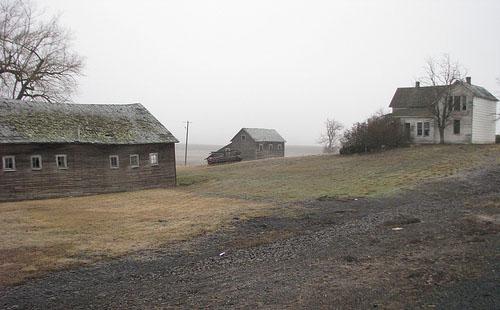
The results of this emerging feudal economy are everywhere. Large areas of the United States are becoming impoverished farm towns with abandoned farmhouses and deserted land. More and more of the countryside has been devoted to massive factory farms and plantations. The consequences, though worse now than ever, have been there for all to see and feel, for decades.

Walter Goldschmidt, an anthropologist with the US Department of Agriculture (USDA) was already documenting the deleterious effects of agribusiness on small communities in California’s Central Valley as long ago as the 1940s (1). (more…)

For Love or Money

July 03, 2012 By: NCVeditor Category: Economy, Robert C. Koehler

Saying ‘No’ to the World of the Debtors’ Hell

by Robert C. Koehler 

Poverty has always been the shadow of prosperity, but now we have an advancing global depression creating more of it — pulling in more and more of the middle class, the folks who aren’t used to it. This is where the headlines are.

Oh, the drama. A suicide epidemic manifests in struggling Europe:

“On March 28, Giuseppe Campaniello set himself on fire in front of the Equitalia office” — Italy’s tax-collection agency — “in Bologna after he received a final notice about the doubling of a fine he could not pay,” Newsweek reported last week. “He died in a burn ward nine days later.”

Economics is a cruel game. The stakes are life and death. The driving theory is simplistic, mechanical, with a cauldron of emotion and judgment bubbling just below the surface.

“Today many people want much bigger government and still more handouts; these freeloaders want others to pay for their sloth,” writes Richard M. Salsman in Forbes. “‘Soak the rich,’ they cry, for the rich allegedly have no right to the wealth they’ve actually earned, but the freeloaders supposedly have a ‘right’ to the wealth they didn’t earn.” (more…)

A Titanic Effort

May 16, 2012 By: NCVeditor Category: Culture, Economy, Jan Hart, Politics

Getting Through Cognitive Dissonance and into Action

by Jan Hart

Our lives are no longer as simple or safe as we once believed.

The institutions we trusted to protect us, serve us, and tell us the truth have proven to be unworthy of our trust. Feeling powerless and afraid, we are easy prey for distractions and false prophets. What happened and where do we go from here?

I remember over 10 years ago reacting with my fellow humans in horrified grief when the planes hit the world trade center. In that moment we Americans came together. We wanted to hear from our leaders, watch the news and respond with action. Initially I agreed with the decision to go into Afghanistan to pursue the terrorists and I stayed glued to the evening news. But with the puzzling shift in focus toward Iraq, my intuitive gut began to question. When ‘weapons of mass destruction’ became a familiar phrase and the march to war gathered momentum, it just didn’t feel right. I wasn’t alone. People around the world were against this invasion and in one day of coordinated action 15 million took to the streets in protest. (more…)

Rolling Back Democracy

March 22, 2012 By: NCVeditor Category: Economy, Politics, Priscilla Stuckey

Closing the Door and Keeping the Rabble in Check

by Priscilla Stuckey

We learned in grade school about the Constitutional Convention, right? That summer of 1787 when the founding fathers gathered in Philadelphia to write the US Constitution? Many of us would be shocked to learn that what the framers of the Constitution did was roll back democratic gains of the American Revolution. They were frightened of too much democracy.

Why does this matter? Because the pressures against democracy today — the interests of the 1 percent of the wealthiest, most powerful Americans who make corporate decisions that threaten the health and well-being of people and Earth — are the same pressures that led to limiting democracy at the start of this country.

The delegates who wrote the Constitution were the 1 percent of their time — white men of means who were merchants and landowners and slaveholders, the majority of them lawyers and a few of them, like Washington, extremely wealthy. They had been living in a democratic experiment for eleven years under the Articles of Confederation, and most of them didn’t like it. They’d seen social upheaval — poor farmers revolting because they were losing their land on account of taxes levied against them to pay for the revolution. Slaves growing more numerous, in some states threatening to outnumber whites. How could elite interests remain safe? A strong central government was needed to keep the rabble in check. (more…)


Switch to our mobile site